
Associate Professor, Juan Carlos Afonso, collaborated with the Clean Air Task Force (CATF) to build a new tecno-economic global model for superhot geothermal energy, which was presented this week at the world's main energy conference: CERAWeek
The new, first-of-its-kind modeling tool released by CATF yesterday highlights the vast energy potential of superhot rock geothermal energy globally. The CATF indicates that "Just 1% of superhot rock resources in Europe have the potential to provide 2.1 terawatts of energy capacity – or enough to meet Berlin’s electricity consumption in 2022, nearly 1400 times over."
Superhot conditions
Superhot rock energy employs cutting-edge deep drilling technologies to access superhot conditions (400°C or hotter) that could potentially provide abundant, always available, renewable, cost-competitive, carbon-free energy – all with a land-use footprint much smaller than that of other energy sources.
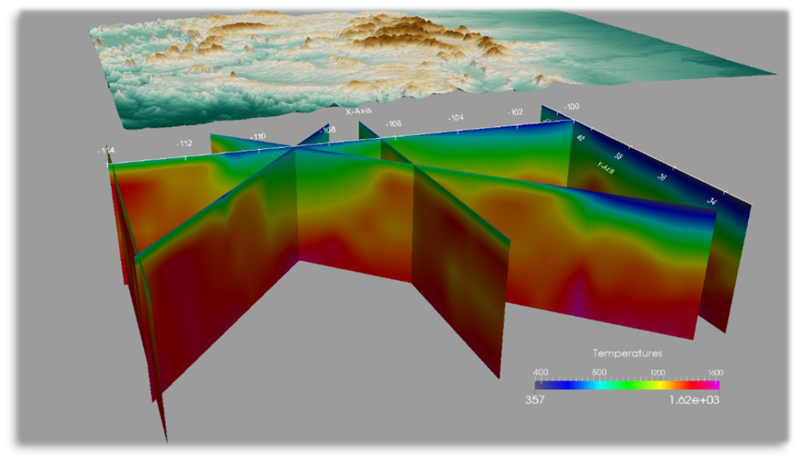
New drilling technologies will soon allow us to reach super-critical (superhot) geothermal reservoirs anywhere in the world. Now we just need to know exactly where to drill.
More information
Dr. Juan Carlos Afonso is an associate professor in the research department of Applied Earth Sciences (AES; Faculty of ITC). Afonso's leading work on the thermal structure of the lithosphere at global and regional scales is behind the CATF report. Afonso is also the coordinator of the Marie Sklodowska Curie Actions (MSCA) Doctoral Network EarthSafe, which will contribute key new technologies and models to support the harnessing of superhot geothermal energy in Europe and beyond.
Explore the world's superhot rock geothermal potential through the modelling tool HERE


