A Day Full of Perspective, Inspiration, and Connections
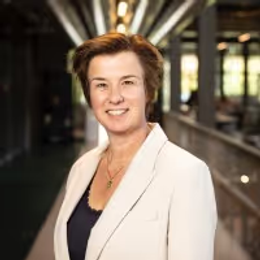
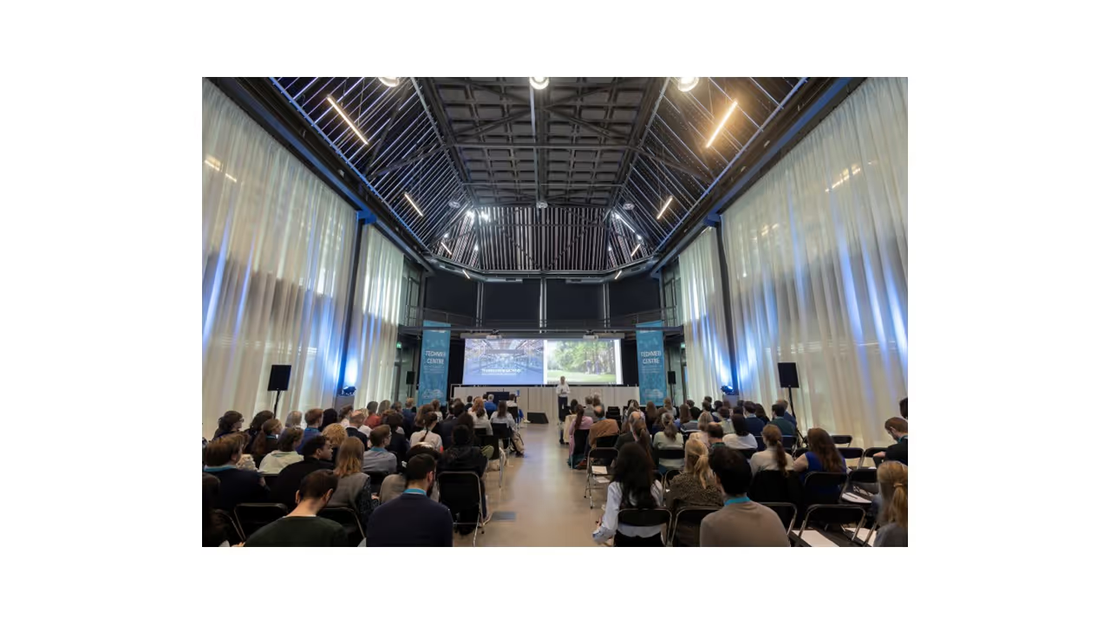
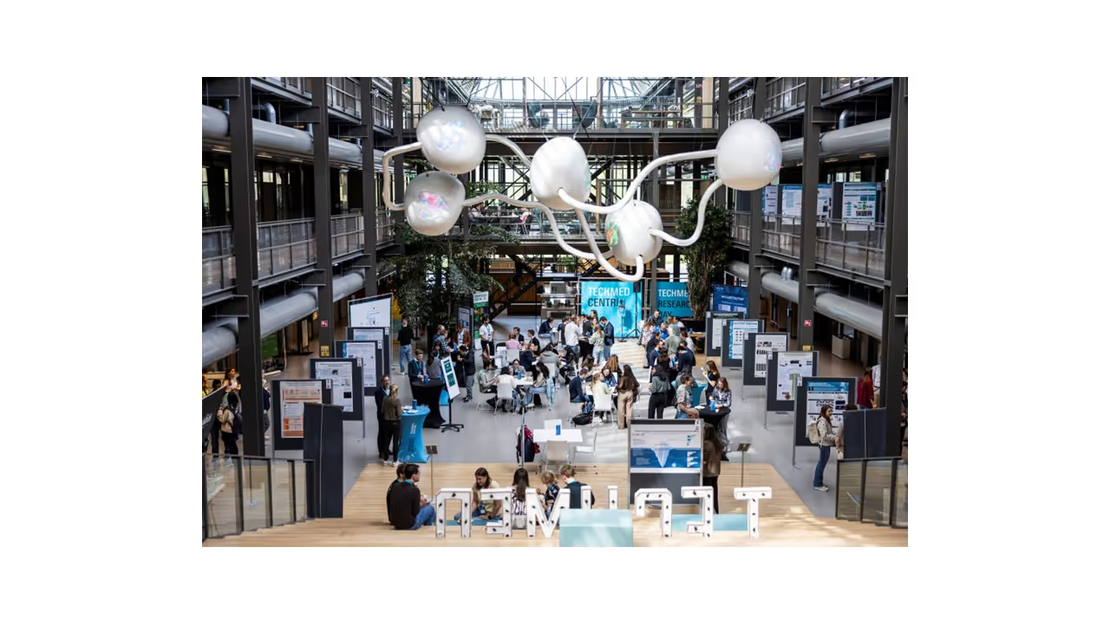
On Thursday, 16 April, more than 240 researchers, students and other professionals came together for the TechMed Research Day at the University of Twente. The day was full of energy from start to finish — driven not just by the programme, but above all by the people who brought it to life. Scientific Director Prof. Dr Maroeska Rovers reflected enthusiastically:
The morning opened with a plenary session by Dr Jur Koksma (Radboudumc), entitled Depends On How You See It. He illustrated how art, imagination and reflection help us see patients, colleagues and our own work differently. His central question — how do we actually measure quality? — Set the tone immediately. Every measurement is a choice, every choice a value judgement. The closing drawing exercise playfully revealed how differently people perceive, interpret and communicate — an invitation to remain open to new perspectives throughout the rest of the day.
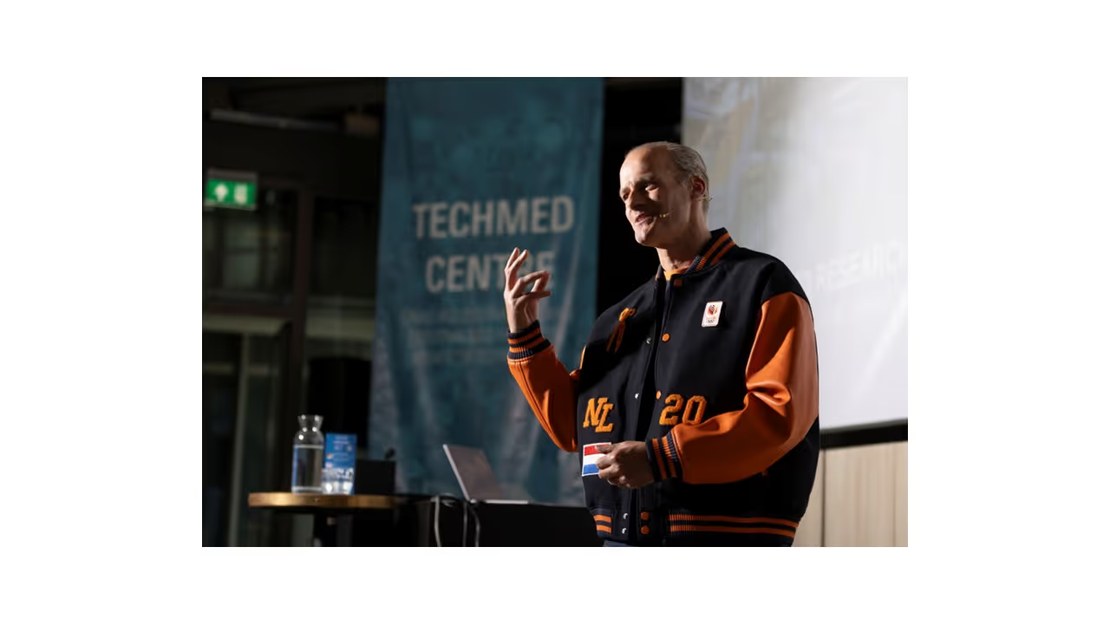
The day closed with a lecture by Dr Maarten Moen, Medical Director at NOC*NSF and Chief Physician to the Dutch Olympic team. Drawing on three concrete challenges — muscle recovery during the Games, shoulder injuries in women’s water polo, and infection prevention just before the start of competition — he demonstrated how significant a role medical technology already plays in elite sport, and how much more is still to be gained. His vision: fewer injuries means more effective training, and more effective training means better performance. The mission of the medical team, as he put it, is ‘responsible maximal performance’ — as many healthy training hours as possible, both physically and mentally. He closed with an explicit invitation to the TechMed community: bring solutions from medical technology to the questions arising from elite sport practice. The hospital of the future and the future of elite sport, he made clear, are closer together than one might think.
A Broad View of Medical Technology
The scientific programme demonstrated the breadth and diversity of research within the TechMed community. Across six parallel sessions, 30 speakers presented their work to a critical and engaged audience of PhD candidates, postdoctoral researchers and senior academics. Six moderated poster tours provided space for more than 55 posters — each offering a glimpse into ongoing research spanning technological innovation and direct clinical application. Themes ranged from robotics and imaging to biomaterials and AI applications in healthcare, but the common thread was consistent: research that stays close to practice and looks beyond the next publication.
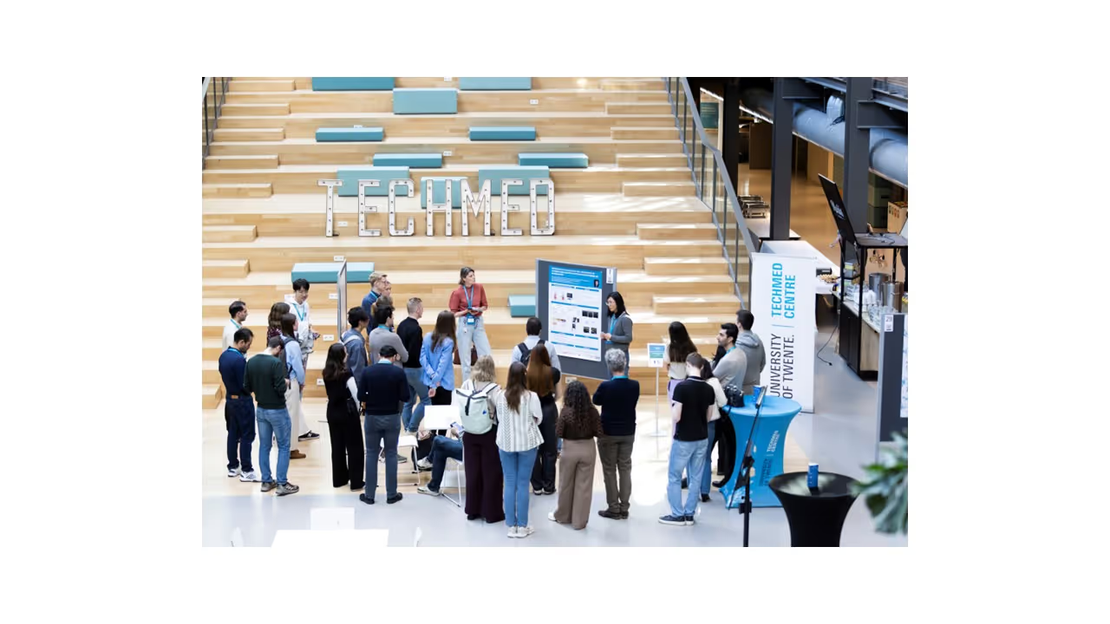
That was evident in the content. Robotics and minimally invasive techniques featured across multiple sessions — from magnetically actuated robots for vascular navigation to soft robotic devices for colonoscopy and endoscopy. Imaging and diagnostics formed another strong cluster: photoacoustic imaging of thyroid nodules, laser speckle contrast imaging, MRI-based analysis of aortic aneurysms and PET/CT applications were all presented. Particularly notable was the focus on the connection between data and care: AI models for paediatric asthma, breast cancer and brain function in comatose patients illustrated how machine learning is increasingly embedded in clinical practice. Biomaterials and organ replacement completed the picture, from dialysis membranes and organoids to an artificial placenta and a bioartificial kidney device. Discussions continued in the corridors, and new collaborations emerged spontaneously. In each session, the jury presented a Discussion Incentive Award to the junior researcher who most enriched the discussion with sharp questions and constructive suggestions.
Talent in the Spotlight
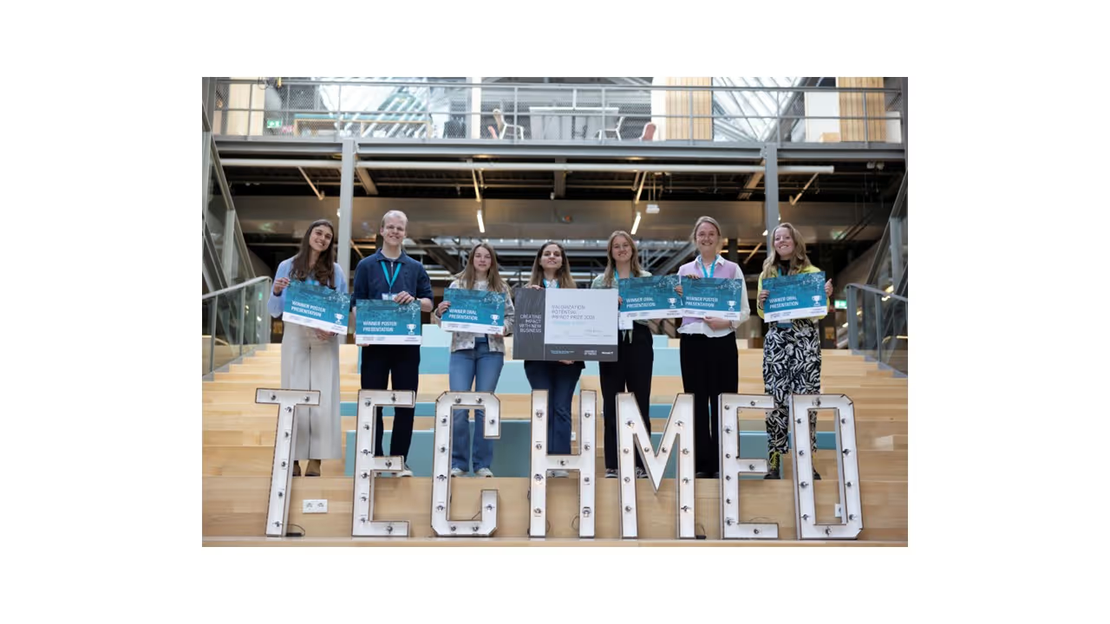
At the end of the day, six researchers received a prize for their presentation, based on audience feedback and scores for submitted abstracts. The three best oral presentations and the three best poster presentations were rewarded with a TechMed Centre hoodie and a ticket to the upcoming TechMed Event on 5 November 2026.
Winners — Oral Presentations
Pauline Fonteijn (EEMCS-AM-MOR) presented a roadmap for regional collaboration in home care and residential care, in which employee preferences are actively incorporated into workforce planning. The model reduced travel time in a case study in Twente by nearly 30%, a concrete result demonstrating how mathematical planning can make a direct contribution to the staffing challenges facing the care sector.
Isa Porsul (TNW-BET-DBE) demonstrated how sacrificial hollow microgels can be used to precisely control cell organisation within organoids. By growing a second cell layer around a microgel and allowing it to merge with the inner tissue following degradation, a layered structure is formed that was previously unattainable. A promising technology for reproducing heart tissue with realistic anatomy.
Nikki van Loenen (EEMCS-EE-BIOS) is developing a urine-based screening test for cervical cancer using lab-on-a-chip diagnostics. As only half of women in the Netherlands participate in current screening programmes, there is an urgent need for a low-barrier alternative. The study showed that a simple dilution of urine significantly improves CRISPR detection, a key finding on the path towards a home self-sampling test.
Winners — Poster Presentations
Alice Correia (BMS-HBE-IEMS) analysed spatial and temporal patterns in response times for out-of-hospital cardiac arrests in Amsterdam. She identified areas with both high incidence and long response times, and showed that each additional kilometre to the nearest ambulance base adds approximately 40 seconds of delay. Early chest compressions by bystanders reduced that delay by an average of three minutes.
Inge de Heer (TNW-BET-AOT) developed a method to improve the blood compatibility of dialysis membranes by integrating glycosaminoglycans directly into the membrane surface during fabrication. This approach, referred to as ‘chemistry-in-a-spinneret’, avoids time-consuming post-processing and produces membranes with better anticoagulant properties than commercial alternatives, without any loss of filtration capacity.
Chris Petri (EEMCS-AM-MOR) is developing a decision-support algorithm for nursing and rehabilitation facilities to determine how many patients can be safely admitted from the hospital. The model accounts for uncertainties in patient inflow and bed occupancy, and minimises the risk of workload peaks for staff, a practical tool addressing one of the most pressing capacity challenges in Dutch elderly care.
Lucia Romano (TNW-BET-AOT) also received the special Valorisation Potential Award for her poster on the development of hollow fibres for an artificial placenta. The prize, a cheque for €100, was presented by Roy Kolkman, Head of the Knowledge Transfer Office at Novel-T.
Shaping the Hospital of the Future Together
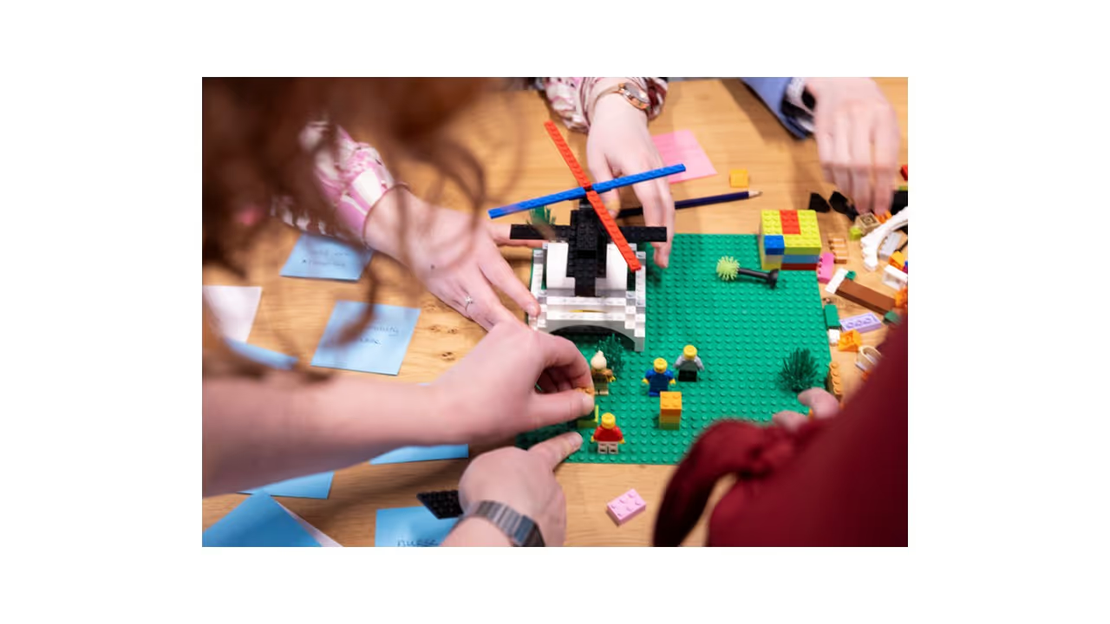
A distinctive element of the 2026 programme was the energetic and interactive afternoon session dedicated to the ‘Hospital of the Future’. Under the inspiring guidance of Francesca, Roberta and Yutong, participants engaged creatively with the Health Innovation Hackathon, working in teams on ideas for a future healthcare system with significantly fewer staff. Through Lego constructions, mini-magazines and short films, they visualised what healthcare could look like in 2040.
At the same time, more than 80 colleagues took part in the discussion on the new Way of Working within the Health Domain at the University of Twente, contributing ideas about the moonshot Hospital of the Future with a remarkable level of engagement. The session made it clear that the energy and willingness to set direction jointly are considerable, though several follow-up meetings will be needed to give this new way of working real shape.
Together, these sessions underlined that the Research Day is not only about sharing results, but also about co-creating ideas, bringing together different perspectives and strengthening collaboration.
About the TechMed Centre
The TechMed Research Day is an annual internal event of the TechMed Centre at the University of Twente, a place where researchers, students and professionals come together to share knowledge and forge new connections in medical technology. The TechMed Centre actively supports researchers in designing and conducting their work. This ranges from guidance on human subjects research and regulatory affairs to support with implementation and access to shared facilities and research infrastructure.
Would you like to experience how research, technology and practice come together? Visit the TechMed Event on 5 November 2026 and discover how we are working together on the hospital of the future. Tickets are available now on a limited basis.