Bioengineering Technologies

Internal Research Portal

The domain Bioengineering Technologies performs both fundamental and applied research with one central mission: the development of innovative diagnostic and therapeutic strategies for patients.
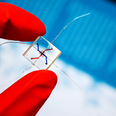
This mission is pursued through the application of state-of-the-art technologies at the interface of chemistry, (stem)cell and molecular biology, biomaterials and membrane science, microfluidics, microengineering and nanotechnology. The domain also provides high-level education in the above fields and creates a stimulating environment for research valorization leading to the creation of products and companies.

Broad range of applications

Our research is multidisciplinary in nature and is applied in a broad range of applications. This spans from injectable hydrogels to battle osteoarthritis, to implantable bioartificial pancreas devices to help to treat type 1 diabetes and to organs-on-chips to test the safety and efficacy of new drugs and therapies. Our students, in the bachelor and master programs of Health Sciences, BioMedical Engineering and Technical Medicine, play an active role in pursuing our mission.

Partnerships are essential in our research. We collaborate with other domains of our university but also with other academic institutions, hospitals and companies, in the Netherlands and abroad. This helps us to bundle knowledge and expertise, valorize research and ultimately to succeed in our mission: to improve healthcare through innovative diagnostic and therapeutic strategies for patients.

Highlights

Bioartificial pancreas devices for treatment of type I diabetes

The Bioartificial Pancreas Devices project at the University of Twente develops novel membrane‑based encapsulation technologies for treating type 1 diabetes. Unlike current insulin therapies, these devices contain insulin‑producing cells protected from the immune system, allowing glucose regulation without injections or lifelong immunosuppression. Researchers tailor membrane porosity and use microfabrication to encapsulate cells in tiny protective capsules that permit nutrient and insulin exchange, offering a promising alternative to donor‑based transplants and improving long‑term glucose control for patients.

(Bio)engineered KidNey systems for blood detoxification

The Bioengineered Kidney Systems research at the University of Twente focuses on developing improved kidney replacements for patients with chronic kidney disease. Traditional dialysis only partially cleanses the blood and donor organs are scarce. Researchers led by Professor Dimitrios Stamatialis are creating advanced systems that mimic natural kidney function, including artificial kidneys using mixed matrix membranes and bioartificial kidneys with living renal cell membranes to remove a broad range of uremic toxins. These technologies could be used in portable or implantable devices to enhance blood detoxification and patient quality of life.

Injectable hydrogels for cartilage repair

Osteoarthritis is the most common rheumatic disease, affecting over 1.2 million people in the Netherlands. It involves gradual cartilage loss, inflammation, and bone malformations, with current treatments mainly reducing pain. Focal cartilage defects, often caused by sports injuries, increase the risk of early-onset osteoarthritis and remain a challenge for orthopaedic surgeons. The Developmental BioEngineering group, led by Professor Marcel Karperien, has developed a reparative strategy using an injectable hydrogel to fill cartilage defects and promote new tissue growth. The hydrogel can also deliver cells in the body and be used in microfluidic devices for fast production of cell-laden microgels, serving as building blocks for complex tissues via bioprinting.

Targeted treatment of cancer

The Targeted Treatment of Cancer research at the University of Twente addresses the challenges of treating cancer by focusing on the tumour microenvironment and tumour stroma, which are key in tumour growth and metastasis. Researchers, led by adjunct Professor Jai Prakash, aim to understand interactions between cancer cells and stromal cells such as CAFs and TAMs, and to identify novel therapeutic targets. The team develops innovative peptide- and nanotechnology‑based approaches to reprogramme the tumour microenvironment and deliver therapies to specific cells, using 3D models like tumour spheroids and tumour‑on‑chip systems to better emulate the tumour environment and improve therapy effectiveness.

3D (bio)printing and fabrication

The 3D Bioprinting research at the University of Twente develops advanced additive manufacturing and biofabrication technologies to create scaffolds, membranes and engineered tissues for medical applications. Researchers such as assistant professor Andreas Poot and professor Dirk Grijpma design biocompatible, biodegradable materials like tubular PTMC scaffolds, while associate professor Jeroen Rouwkema’s group focuses on 3D bioprinting vascularised tissues with organised networks of large and small vessels. By controlling the mechanical and chemical properties of the cellular environment, this work supports tissue growth, nutrient delivery and integration in future regenerative therapies and implantable devices.

Coordinators

prof.dr. H.B.J. Karperien (Marcel)
Full Professor
prof.dr. P.C.J.J. Passier (Robert)
Full Professor

Involved research groups

Partnerships