


 What does a conflict in the Middle East mean for our climate risks?While the world focuses on ongoing geopolitical tensions in the Middle East, Professor Maarten van Aalst poses a pressing question: how do these developments affect our fight against climate change? Is an oil crisis yet another setback — or could it also be an opportunity to make our world more liveable at a faster pace?
 Here's how you can turn eco-anxiety into actionYou doom scroll past another wildfire. A melting glacier. You might feel dread, or maybe a hollow kind of sadness. You close the tab, because what can you actually do about it? If that sounds familiar, you're not alone. Just like sea levels and temperatures, levels of eco-anxiety are rising globally. This feeling, uncomfortable as it is, might be exactly where meaningful action begins.
 What would it take to boost voter turnout in Enschede?Why do so many residents of Enschede not vote in municipal elections? The short answer: because inequality, distrust and everyday pressures together create a barrier that is far higher than what a single election day can overcome. In a conversation with political scientist Floris Vermeulen, a complex (but not hopeless) story unfolds. “Low turnout is not a lack of interest in politics. It is often a rational response to years of lived experience.”
 Olympic questions: What makes an ice skating suit faster?Ice skating at speeds exceeding 50 kilometres per hour. How do olympians achieve that top speed on the ice? The push-off is crucial, of course, but did you know that at Olympic speeds, approximately 80 per cent of the opposing force is air resistance? In this episode of Kees Study, I dive into the wind tunnel to discover how aerodynamics can make the difference between silver and gold.
 Natural ice in decline? Bridges may hold the answerDuring the 2026 Olympic Games in Milan, we hope that TeamNL will win a record number of speed‑skating medals. Go Joy, Jutta, Kjeld, Joep, et al.! Yet, ironically, our Dutch champions can rarely train on natural ice in the Netherlands. Quite simply because it is too warm. Professor Mark van der Meijde is determined to keep the tradition of natural ice skating alive in the Netherlands, and he may have found a potential solution. In a rather surprising place: on bridges and flyovers. These can become icy even when temperatures are still just above freezing. How is that possible? And can we use the same effect to get skaters onto the ice sooner?
 How UT’s first wine harvest prevents microplastics in agricultureDo you know what polymer chemistry and wine have in common? The Sustainable Polymer Chemistry Group at the University of Twente harvested grapes from our own small vineyard on campus, which yielded 25 litres of white wine. While the wine is purely for the seasonal festivities, the grape leaves are being used to study biodegradable nano- and microcarriers that leave no microplastics behind.
 Clean cooking in Madagascar: Mechanical Engineering student Gabe-Jan developed a solutionSustainable and safe cooking is far from a given everywhere in the world. In Madagascar, for example, the vast majority of the population cooks using wood or charcoal, which can cause lung problems, among other health issues. During his graduation project, Gabe-Jan, now an alumnus of the Master’s in Mechanical Engineering, helped develop an alternative. He designed a sustainable and safe solution based on solar energy and thermal storage.
 Twente clay captures CO₂ from biogasHow can CO₂ be captured without complex installations or high energy costs? A research team in Twente discovered that the answer was literally beneath our feet: clay. From that insight emerged CarbSorbTec, a University of Twente spin-off that uses a special clay material to remove CO₂ from biogas.
 How do we design cities that protect us?Two crises converge in the urban environment: the climate crisis and the crisis of mental health. Design expert Thomas van Rompay conducts research in the field of planetary health. “I want us to design cities where greenery not only cools the environment, but also calms the mind.”
 5 reasons why a home water filter is not a good ideaThe Netherlands has exceptionally clean tap water. Drinking water companies purify it with modern technologies such as membranes and check the quality continuously. Yet some TikTok influencers try to scare you off and try to sell you a home water filter. Experts such as UT professor Wiebe de Vos warn that home filters are unnecessary. Here are five reasons why a home water filter in the Netherlands is mostly unnecessary and sometimes detrimental.
 You have this goldmine lying in your houseEvery old phone in your drawer is more than forgotten tech—it’s a treasure chest of critical materials like gold, cobalt, and rare earth elements. Recycling them could save the planet, reduce dependency on China and Congo, and power Europe’s green future. Here’s why your old phone matters.
 Can the brain help us fix AI’s energy problem?Artificial Intelligence keeps growing more powerful and more energy-hungry. Could the human brain inspire a solution? In a “Universiteit van Nederland” podcast, Full Professor of Nano Electronics Wilfred van der Wiel explores whether brain-inspired hardware might change the game.
 Can these membranes help us meet future water demand?Heatwaves, droughts, and a growing population are making it more challenging to meet water demand, even in a water-rich country such as the Netherlands. By 2030, our society is estimated to need an additional 100 million cubic metres of drinking water per year. A membrane technology studied at the University of Twente could turn the North Sea into a source of fresh water, preventing water shortage in the future. But Prof. Wiebe de Vos asks, “Is this the smartest choice?”
 The forgotten problem of the energy transitionIn Spain, the lights went out for millions of people. Not because of a cyber attack, but because of... sunlight. Researchers at the University of Twente see this as a lesson in systems thinking: sustainable solutions require smart direction. And that involves more maths than you might expect.
 What if you lost your home to a natural disaster?Losing everything in a matter of hours. Your house underwater, no safe place to go. For millions of people around the world, this is not an exception but a reality that happens more often than we think. Even in Europe, disasters are becoming more frequent, and it is becoming increasingly clear how vulnerable our homes are.
 Citizen science in the treetopsAt sunrise, deep in Ghana’s tropical forest, a camera 40 metres above ground wakes up. It captures a treetop bursting into bloom, or not... A small detail in a vast green landscape, but one that holds a crucial clue to understanding how our climate is changing.
 Idea from Twente to nationwide movementThe energy transition requires action. Not just from policymakers or engineers, but precisely from the people who have to do it: the installation engineers, work planners and technicians. They are the key to change. But how do you give them space to learn the necessary skills as well as to innovate?
 Kees Study: Can board games make us more climate resilient?What if preparing for climate change could be as simple as playing a game? Cities everywhere are dealing with flooding, but not everyone knows what they can do to help. Sustainable Drainage Systems (SuDS), like rain barrels and green roofs, could make a huge difference. But how do you educate people about them? My name is Kees, and I am participating in experiments to learn more about the research at the University of Twente. In this Kees Study, I participated in the research of Dr. Carissa Champlin from the Urban and Regional Planning department at ITC.
 Why is rubber indispensable in our daily lives?From the tyres that keep our cars safely on the road to the soles of our shoes that provide comfort with every step – rubber is everywhere. But what makes this material so essential to our daily lives? In this story, we delve into the world of rubber alongside Professor Dr Anke Blume, an expert in elastomer technology at the University of Twente, to understand its many uses and why it matters so much.
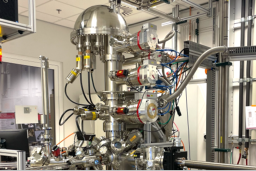 The battery in your smartphone could last much longer than it does nowBatteries are everywhere. In your pocket, in your car and in lots of other places. Yet, despite their ubiquity, batteries are far from reaching their full potential. They degrade over time, charge slowly and are often made of unethically sourced or environmentally harmful materials. Prof. Mark Huijben and his Research Group are looking into novel battery materials to extend battery life and improve performance across applications, from smartphones to heavy machinery.
 What satellites don’t tell us (yet): The Veluwe as a living laboratoryIn the heart of the Netherlands, among the centuries-old trees of the Veluwe, a new way of studying our planet is taking shape. Using advanced sensors, Paul Vermunt is comparing mathematical models with satellite data. His ultimate goal is to enable satellites from among other ESA to measure the water content in forests.
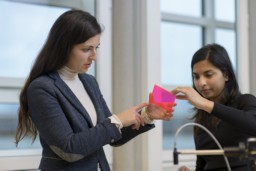 Why do solar panels struggle in winter?Did you know that in winter, solar panels produce only 10% of their summer output? In a country like the Netherlands, where we lead the world with 3.5 solar panels per person, this seasonal drop is a major challenge. Why do solar panels produce so little energy in winter? And what can we do about it?
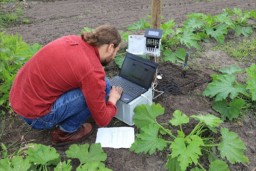 Is this the farm of tomorrow?At Citizen Farm Herenboeren Usseler Es, farmers are exploring how data can help them adapt to climate change challenges, such as unpredictable weather and longer growing seasons. Researchers from the University of Twente are helping by providing them with more precise data for better-informed farming decisions. The goal is to enhance local food production while offering valuable insights for farms around the world.
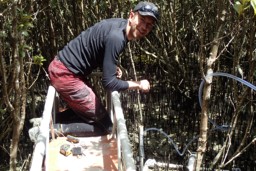 Mangroves: the natural superheroes that protect our coastsWhen you think of protecting our coasts, you probably think of dikes and seawalls. But did you know that mangroves, a special type of tree that grows between land and sea, also play an essential role in coastal protection? In this story, Erik Horstman, associate professor of Civil Engineering, tells you how these unique trees can be the key to defending our coasts against rising sea levels and extreme weather conditions.
 Water, water everywhere... and not a drop to drink: How the Netherlands keeps its drinking water safeThe Netherlands faces a water crisis: too much water, a shortage of water, agricultural fertilisers, and industrial pollution such as PFAS and medicine residues threaten our drinking water supply. Some new businesses are already denied drinking water connections; new residential areas may soon meet the same fate. It is crucial to invest in water technology for a sustainable future.
 How can hydrogen save the overloaded grid?As the world switches to renewable energy, the electric grid — originally designed for the stable energy flows from centralised fossil fuel power plants — is struggling to keep up. Electric vehicles, heavy machinery, and fluctuating sources like solar and wind are putting more strain on the grid. Could blue and green hydrogen be a solution to keep the lights on and machines running?
In this story, Dr. Yashar Hajimolana, Assistant Professor Energy Systems Integration at the University of Twente, explains how hydrogen can contribute to a more sustainable and stable energy system.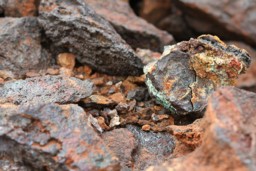 Five minerals that can help to save the planet from the carbon crisis (natural kryptonite is one of them)The switch from fossil fuels to renewable energy is going to need some nifty technology that depends on chemical elements that we have not used much before, and most of these come from minerals in rocks in the Earth’s crust. Five of these minerals stand out as Earth’s potential lifesavers.
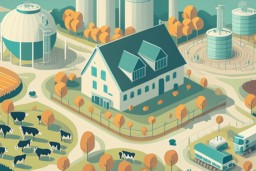 From waste to wealth: Overijssel’s Green RevolutionThe province of Overijssel is known for its robust agricultural and animal-farming activities. But the bustling livestock farms come with a cost. The animals produce an overwhelming amount of manure, leading to water pollution and harmful emissions. But what if this ‘waste’ could become a source of energy?
 Will we be going on holiday in a hydrogen plane in 10 years' time?How can we make our holidays more sustainable? A question that concerns many engineers, scientists, and citizens. Emissions need to decrease, but in the aviation industry, that's not so simple yet. Research at the University of Twente is investigating a promising technology that could lead to hydrogen-powered airplanes: cryogenic superconductivity.
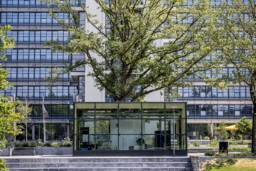 This glass laboratory could be the key to unlimited clean drinking waterA looming shortage of clean drinking water is screaming for innovations in water treatment. The Waterlab of the Membrane Science and Technology cluster gives an insight into possible solutions.
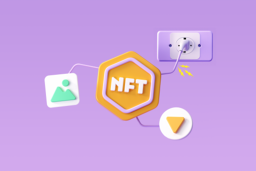 The pollution of our digital worldBitcoin, non-fungible tokens (NFTs), and other popular blockchain innovations represent our shift to a digital society. But this transition comes at a cost. The emissions generated by these blockchain technologies from the year 2021 alone are responsible for around 19,000 future deaths. This alarming statistic raises many questions: How is this possible and what can we do about it?
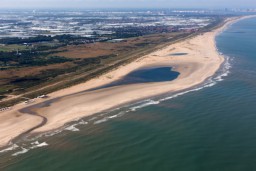 God created the earth, but the Dutch created the NetherlandsThe Netherlands has been fighting a battle against water for centuries. This symbolism of water as the enemy was popular among 20th-century engineers. In the 21st century, there is more focus on natural processes, and we speak of water management instead. But what will the Dutch water landscape look like in another century?
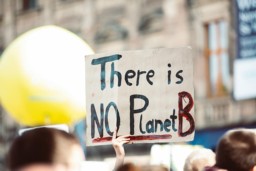 Why we need to think about a climate plan BCan we limit global warming to 1.5 oC? Unlikely, if you'd ask Debra Roberts. The co-chair of the Intergovernmental Panel on Climate Change (IPCC) is already brainstorming about a plan B. What could be our next steps?

Filter