


 What should students still learn in the age of AI?Students are increasingly using AI to write texts, create summaries and even solve complex problems. What was still experimental just a few years ago has now become part of everyday education. But this raises a fundamental question: what should students still be able to do themselves, and what do we leave to AI?
 How data and algorithms improve performance in professional football13 January, last 16 of the KNVB Cup. FC Twente are playing away at FC Utrecht. In the 59th minute, Twente are 1-0 down. Something has to change. Van den Brom makes a substitution and brings on Ricky van Wolfswinkel for Sam Lammers. Nine minutes later, it pays off. Van Wolfswinkel scores the equaliser. Late in the match, Mats Rots makes it 1-2 and turns the game around.
Every supporter recognises this moment. A substitution can change the course of a match. Sometimes it works, sometimes it does not. But what actually happens when a substitute comes on? And can you measure that impact? When do you really need surgery?What happens when a tear suddenly develops in your coronary artery? Do you need immediate surgery, or is medication enough? It’s a crucial and complex decision. In this video, technical physician Lennart van de Velde shows how a digital copy of your aorta helps doctors to choose the most appropirate treatment.
 Olympic questions: which tech makes you move better?In elite sport, progress is measured in tiny improvements. But for athletes who are not (yet) competing at Olympic level, sports technology can enable major leaps forward. At the University of Twente, Associate Professor Dennis Reidsma works with students and colleagues to explore how interactive systems are transforming sport and motor learning.
 Snapchat's Secret Sauce: how your phone knows you’ve winkedYou raise an eyebrow and a cartoon crown pops onto your head. You hold up to fingers, and suddenly: flames! Snapchat filters might feel like magic, but they’re not. Behind every funny mask and smooth skin effect is a computer that has learned to ‘see’. At the University of Twente, student learn to do this themselves. Creative engineering!
 What ethical AI in research really meansAs AI tools become inseparable from student essays, scientific writing, and data analysis, universities across the globe are scrambling to decide what counts as “ethical use.” Some draw the line at letting tools such as ChatGPT write for you; others simply ask that you be transparent and honest.
 Do smart cities make us safer?Smart cities promise to make us safer. Cameras on every corner that detect violence and algorithms that alert the police before anyone calls. For many, that sounds reassuring. But how safe do these systems really make us, and more importantly, for whom?
 Sinteresting: How can Sinterklaas find the fastest route through the Netherlands?Every year, Sinterklaas and his Pieten travel across the entire country to deliver presents. But last year, things did not go quite as planned. To keep an overview, Sinterklaas decided to visit all cities in alphabetical order. It sounded logical, but somewhere around the letter P he was already hopelessly behind schedule. Time was running out, and the route became increasingly illogical.
 Why does ChatGPT write terrible Secret Santa poems?Imagine: it’s Secret Santa night. You nervously tap on your phone and ask ChatGPT to whip up a quick poem. The result is… um, well… not exactly gift-worthy. Why are AI models such as ChatGPT often unable to rhyme properly? Thijs van Ede, AI researcher at the University of Twente, knows why and explains AI and rhyming.
 How do smart cars react so quickly?Imagine you are sitting in a self-driving car. Suddenly, someone runs across the street. In a fraction of a second, the car decides to brake. How does it do that so quickly? And could it do so even faster or with less energy, especially now that self-driving cars and autonomous vehicles rely heavily on cameras, smart sensors and AI systems?
 How can we make AI more humane and inclusive?When we talk about artificial intelligence, we often think of data, algorithms and efficiency. But what if we approached technology not just as something functional, but as something deeply human? Something that doesn’t replace us, but connects us?
 Election questions: Is digital inequality a threat to our democracy?Election programmes, debates, news, and campaigns. Almost everything related to elections now takes place online. But not everyone has equal access to that digital world. What does this mean for our democracy?
 Election questions: Does our search behaviour lead to polarisation?We Google everything: the FC Twente match schedule, the release date of GTA 6, or a recipe for pasta carbonara. And as the elections draw nearer, we also look up party manifestos, voting guides and fact checks of campaign promises. Our search for information usually begins with a search engine. But what if that very search behaviour fuels division instead of understanding?
 Election questions: Why don’t we vote digitally (yet)?We do almost everything online these days, from banking and grocery shopping to booking holidays. So why do we still vote with paper and pencil? In the Election Questions 2026 series, UT researchers explore how science helps us understand the dilemmas voters face. This time, we spoke with Roland van Rijswijk-Deij, full professor of Data-Driven Internet Security, about one key question: why haven’t we gone digital at the ballot box?
 Election questions: Should you use AI for voting advice?More and more people are turning to chatbots for answers. Fast, convenient, and sometimes even with ready-made advice. But how wise is it to ask ChatGPT for guidance on what you should vote for on October 29 in the Dutch parliamentary elections? And if you do want to use it, what’s the best way to go about it? I asked Maurice van Keulen, adjunct professor of Data Science at the University of Twente.
 Why your circle of friends determines how fast diseases spreadHow does the tendency to connect with people like yourself affect the spread of epidemics? Mathematician Clara Stegehuis shows in her research that these social patterns play a key role in how quickly and widely diseases spread.
 CSI in Twente: what AI can tell us at the crime sceneEntering a drug lab without knowing which gases are being released is life-threatening. “That risk needs to be reduced,” says University of Twente researcher Dimitar Rangelov. Together with Saxion University of Applied Sciences, the Police Academy and the Technical University of Sofia, he is developing an AI-driven forensic investigation system that makes crime scene work faster, safer and more accurate.
 How AI and wearables catch hidden surgical risks before they hitAfter surgery or treatment for cancer or obesity, the hospital bed is often exchanged for the comfort of home as soon as possible. While discharge marks the end of hospital-based care, it does not eliminate the risk of post-treatment complications.
 From chessboard to delivery van: how algorithms improve logisticsIt is well known that artificial intelligence can beat the best players in board games, but did you know that UT is using the same techniques to make logistics more efficient? So your groceries are delivered smarter while ASML saves millions.
 Citizen science in the treetopsAt sunrise, deep in Ghana’s tropical forest, a camera 40 metres above ground wakes up. It captures a treetop bursting into bloom, or not... A small detail in a vast green landscape, but one that holds a crucial clue to understanding how our climate is changing.
 Violence against women in today’s society: how Communication Science students work towards a better futureThe Gisèle Pelicot case, the new Netflix series Adolescence, and the harmful effects of misogynistic influencers like Andrew Tate – violence against women is getting more traction in traditional media than ever before. Sadly, though, this increased awareness does not automatically translate into progress; globally, almost one in three women has experienced physical and/or sexual violence at least once in their lives*. That’s why, as part of their project, Communication Science students Carly, Ioanna, Leonie, and Nancy dove into the complex problem of violence against women in modern society.
 The manosphere unmasked: How online cultures entangle young people in extreme ideasImagine this: you’re scrolling through TikTok, watching a few videos, and before you know it, you're caught in an endless stream of clips featuring men who claim to reveal how the world really works. Men who present themselves as strong and successful, surrounded by luxury cars, cigars, and bold opinions. For a moment, it might feel like they truly understand you. Like they’re offering a truth the rest of the world refuses to see. That’s the appeal of the manosphere: an online subculture where traditional ideas about masculinity, power, and women are repackaged into flashy, persuasive content.
 Developing AI that doctors can trustAI helps clinicians quickly find the information they need, filtering hundreds of reports and documents, automating processes, and preventing something from being overlooked. But traditional AI isn't safe enough when it comes to high-level tasks, such as diagnosing. Here, explainability is crucial. Unlike non-explainable models that operate like black boxes, explainable AI follows a clinically acceptable reasoning and reveals how it arrives at a decision, so doctors can evaluate whether its output is trustworthy.
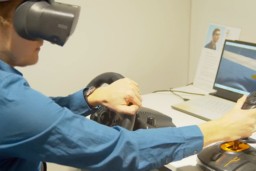 Kees Study: Can Kees drive an asphalt roller?What happens when you let someone with no experience drive a rolling machine? In this episode of Kees Study, Kees explores how people learn new skills with technology.
 How digital technology can support vulnerable groupsYou are young, struggling with your identity, and feel misunderstood by those around you. When you finally take the step to seek help, you find yourself on a two-year waiting list. In the meantime? Little to no support. For many LGBTQ young people, this is not a fictional scenario, but the harsh reality. The healthcare system is stuck: GPs are at a loss and psychological care is overloaded. But what if digital technology can play a role in this?
 How Big Tech is weaponising public opinionPropaganda used to be distributed through leaflets or broadcast over the radio. Today, it reaches us with a click on our smartphones, and it is tailored to our preferences. The way we consume information has changed - and with it, the way we form our beliefs about political and social institutions. Assistant professor Adam Heschke is worried about what comes next.
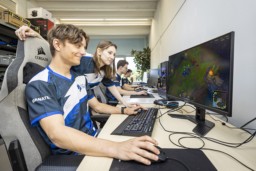 Five reasons why playing games is actually good for youThere is no way around it: gaming is the largest entertainment industry in the world. Ask any concerned parent what they think of digital games, though, and the answers paint a picture of addictive, isolating, and violent time-wasters. How could such horrible things draw in billions of players?
 From sand to smartphoneThe smartphone in your pocket and other electronic devices are packed with microchips. With a huge demand for smartphones, computers, and other smart technologies, there is a global shortage of these chips. Production processes simply cannot keep pace with the immense demand. But why does making a computer chip take so long?
 How your mobile internet could be much betterImagine: you’re at a festival, and your phone always has full signal. No more slow internet or apps that won’t load. Sounds like a dream, right? Lotte Weedage, a PhD candidate at the University of Twente, is researching ways to improve the mobile network in the Netherlands, so this could become a reality.
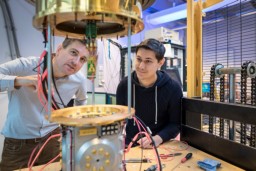 Our tech is a huge energy guzzler, here's how we're changing itIf we continue like this, ICT applications will account for no less than twenty percent of our total electricity consumption by 2030. Data centers, AI, the many millions of questions we ask Google every day... It takes an enormous amount of computing power and therefore energy. This can and must change, agrees Professor Wilfred van der Wiel of the University of Twente.
 Mini-lectures Zwarte Cross, episode 3: Chips, digital tastemakers from Dutch soilThe Universitent at the Zwarte Cross, the largest festival in the Netherlands, has been a successful concept for years. In this summer series you can watch the mini-lectures again. In episode 3, Guus Rijnders talks about computer chips.
 Does screen time impact your lifestyle and health? Creative Technology students show you how!Most people know that spending too much time on your phone can negatively affect your mental health. Yet here we are – often chronically online and spending most of our (free) time on screens, with all its consequences. That’s why student Creative Technology Nina and her project group decided to create an interactive installation for people to reflect on their screen time and happiness. In this article, she talks all about their work and its importance in today’s society.
 Mini-lectures Zwarte Cross, episode 1: Beer and IT, is it a good idea? (video in Dutch)The Universitent at Zwarte Cross, the biggest festival in the Netherlands, has been a successful concept for years. In this summer series, you can revisit the mini-lectures. In episode 1, Dr Ton Spil talks about beer and IT.
 How satellites expose urban inequalities in the Global SouthMass evictions, daily power outages, and pitch-black streets at night: the challenges that people in the Global South face remain largely overlooked. How can satellite imagery uncover the hidden realities of urbanisation? Prof. Dr. Monika Kuffer’s research strives to spotlight urban inequalities and prompt policymakers to take action.
 Beyond borders: this is the future of specialist careEnsuring access to specialist care at peak periods is challenging, especially in sparsely populated areas with fewer available healthcare specialists. Project BRIDGE tries to tackle this issue in an unconventional way: hospitals in the German-Dutch border region are joining forces to share healthcare personnel. As simple as this sounds, is it so in practice?
 How Digital Twin Cities are Shaping TomorrowMost of us have done it, walking through familiar streets or looking at your own house with a street view service. Now imagine doing this with a complete virtual replica. Every street, every car, every person walking to their work is meticulously simulated. This is a city digital twin. Discover how researchers at the Digital Twin Geohub of the University of Twente are transforming urban planning – one virtual city at a time.
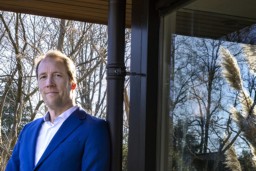 How digitalisation is exacerbating social inequalityWe live in a world where almost everyone is online. The internet is a near-endless source of information, a space where we keep in contact with loved ones and where we work and consume. But what if you do not have access to the internet, because of a lack of motivation, skills, or don’t have a computer? Digital inequality increases the social gap between people and can even lead to exclusion. Alexander van Deursen, professor of communication science at the University of Twente, is investigating how digital inequality arises and how we can combat it.
 Cities are cloned in the virtual world to transform urban planningBy 2050, nearly 70% of the world's population will live in cities1. Urban planning decisions made today have a critical impact on the future, which means there is less room for trial and error. How can we address the increase in urban populations and make future cities more sustainable?
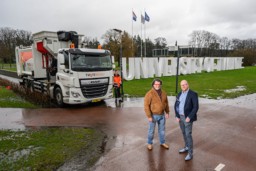 Ideal route for rubbish truck thanks to smart algorithmEvery resident of Twente knows them: the trucks of waste collector Twente Milieu driving through the streets to empty the green, orange or grey minicontainer. To ensure that the rubbish trucks empty the five million minicontainers annually as efficiently as possible, perfect route planning is needed.
 The pollution of our digital worldBitcoin, non-fungible tokens (NFTs), and other popular blockchain innovations represent our shift to a digital society. But this transition comes at a cost. The emissions generated by these blockchain technologies from the year 2021 alone are responsible for around 19,000 future deaths. This alarming statistic raises many questions: How is this possible and what can we do about it?
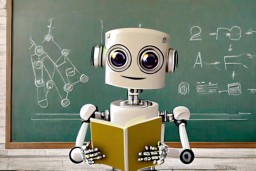 The classroom of the future: will we be taught by AI?In a world where technologies such as artificial intelligence (AI) are developing rapidly, the question arises: will AI be our next teacher? Imagine lecture halls filled with chatbots, robots and holograms giving lectures. Sounds like something out of a science fiction movie, right? Yet this scenario is less far-fetched than it seems, given the speed at which AI is developing. But according to Kim Schildkamp, professor at the University of Twente's ELAN teacher training programme, these technologies will never completely replace our teachers because human relationships are far too important in the classroom.
 Podcast #4: The data security detanglerExplore the future in our podcast series, "My Future Dream Job," where Anic van Damme guides you to the year 2030. Our scientists explore prospective careers in cybersecurity, climate adaptation, and energy transition. Listen in to gain insights into the professions taking shape at the University of Twente.
 Podcast #1: The human-machine interaction expertExplore the future in our podcast series, "My Future Dream Job," where Anic van Damme guides you to the year 2030. Our scientists explore prospective careers in cybersecurity, climate adaptation, and energy transition. Listen in to gain insights into the professions taking shape at the University of Twente.
 The future of work: robots as colleagues?The labour market is under pressure. From the busy airports of Schiphol to the hectic hospital corridors, there's a huge shortage of staff everywhere. Perhaps you've already noticed the effects yourself. Restaurants operate with fewer staff, leading to longer waiting times for your food. Classrooms are fuller due to the lack of teachers or masters. And your parcels? Those take longer to arrive because of understaffed delivery services. Even buses and trains are less frequent on the roads and tracks.

Filter