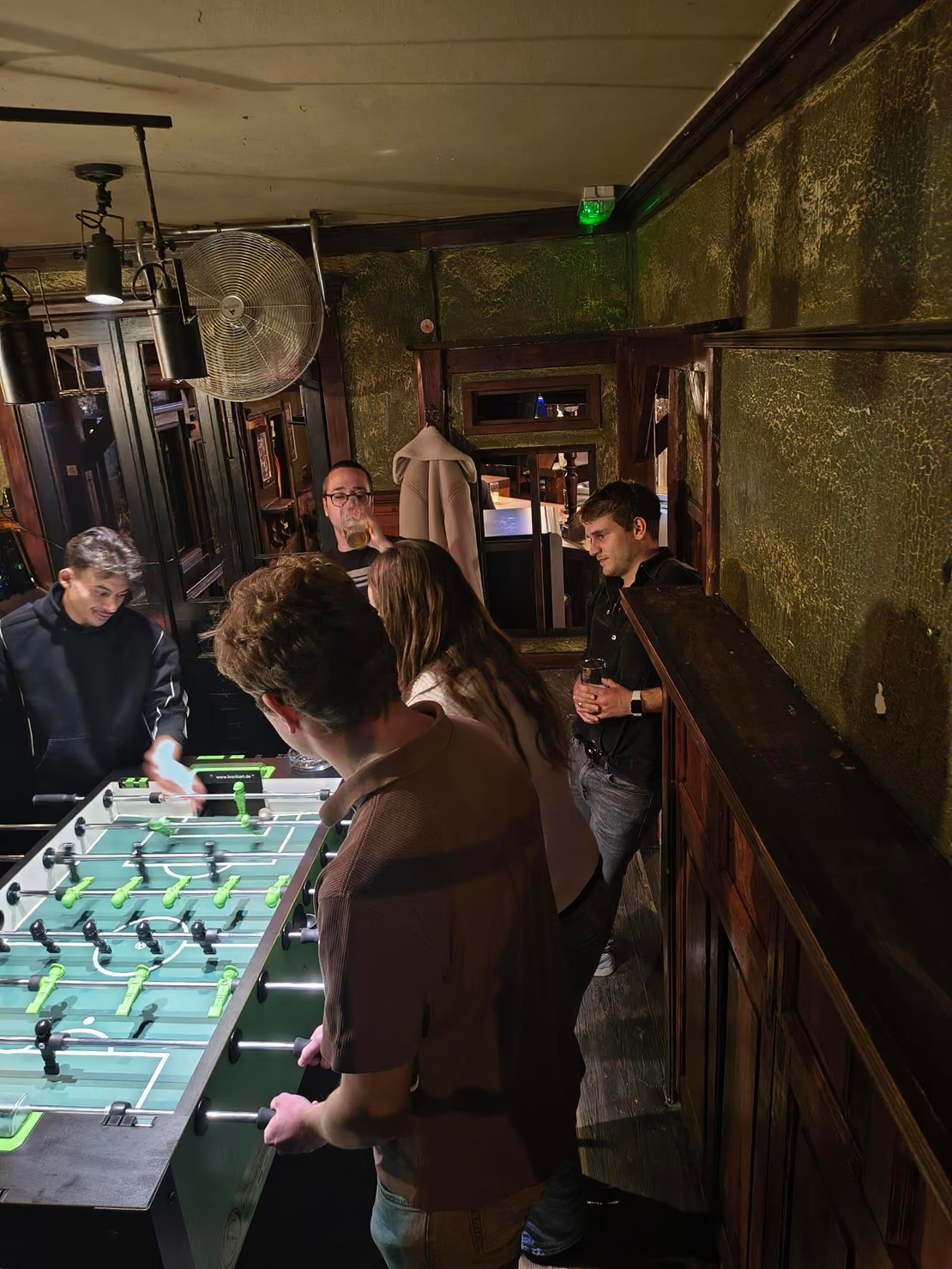
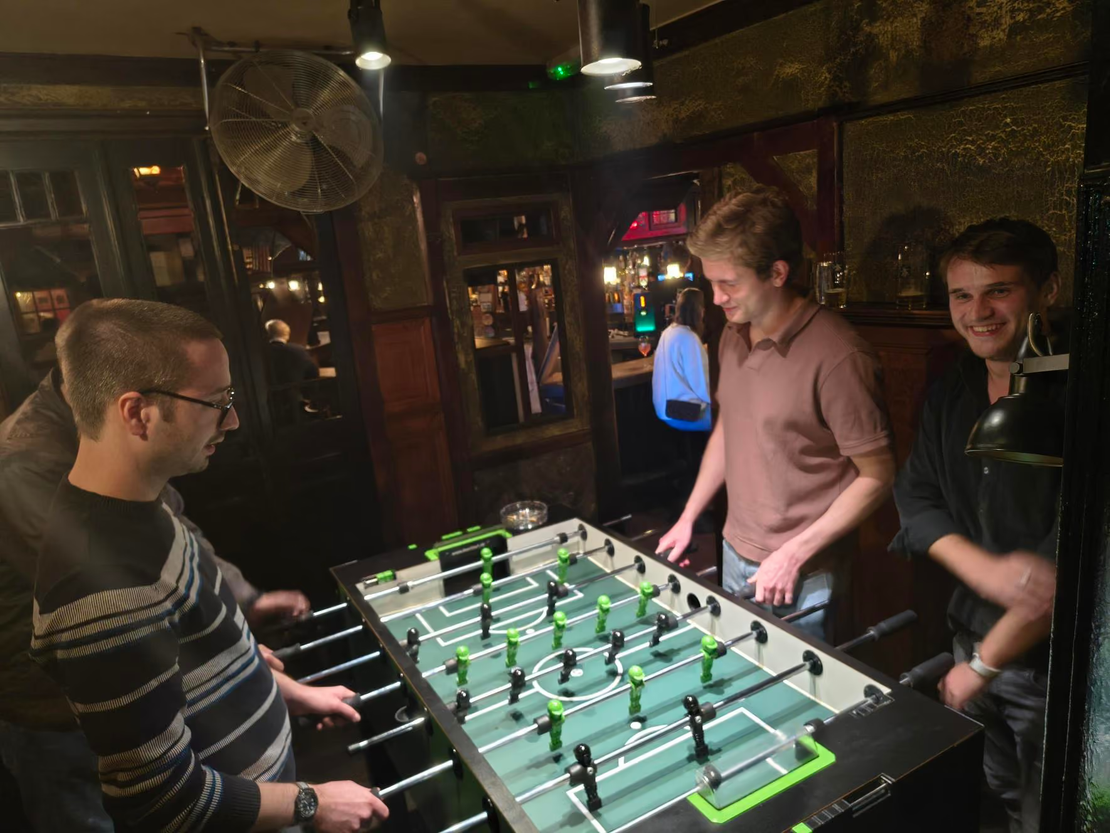
Disclaimer: This club is NOT (!) part of the formal UT education program. There are no ECs attached. This is purely for fun.
An informal club of curious minds to raise scientific thinkers
The informal club was first founded by Maximilian A. Friehs towards the end of 2023. Since then, the club has met every couple of weeks either in person or online, worked on projects together and written papers. But mostly just discussed research. For a full list of student publications from PCRS students, please refer to this website. If you are a student interested in research and want to join our group then please reach out to Max and get invited to the Teams environment!***see at bottm of the page***
We are open for all students from all programs; no prior knowledge or commitment required !
The Goal. A scientist is somebody with an academic mindset, that can evaluate what they are being presented and carry out systematic observations to find an answer to a question. Although usually students are not considered ‘academic staff’, in this club students are the main researchers. They are the ones asking the questions and looking for answer. Here a student can gain a guided insight into the world of academic publishing.
The Problem. In todays society in general and even in the universities people are bad at judging the soundness of academic literature and have difficulties understanding the publication process. To the outside observer all journals and all papers may seem alike, but what differentiates good and bad research? How does peer-review help self-regulate the scientific community and act as a quality control process? This also leads to an increase in scepticism in science and a devaluation of fundamental research. During their studies, many students feel overwhelmed or intimidated by the prospect of independent research.
A potential step towards a Solution. The Research Enthusiasts Club can provide a supportive environment where students can gain confidence in their own abilities; either through publishing their work, participating in discussions or joining a conference. Workshops on research methodology, data analysis, and scientific communication empower students to tackle their projects with confidence. Additionally, participation in supervised peer review allows them to receive and provide constructive, high-level feedback, a valuable skill for any aspiring scientist.
The Benefit. Ultimately, this club empowers the next generation of scientific thinkers, but mainly it brings like-minded and curious people together to discuss research in a safe environment. This is as much a social club as it is a research focussed endevour.
ASSOCIATED STAFF MEMBERS
- Maximilian A. Friehs (Psychology; founder)
- Marcello Gómez Maureira (Human-Media Interaction)
- Tom Nyhoff (Psychology)
- Martin Schmettow (Psychology)
- Cesco Willemse (Psychology)
FRIENDS OF THE CLUB
TESTIMONIALS
Alina's Experience
Hello fellow Research Enthusiasts!
I’m Alina Kaufmann, currently a second year Research Master of Social Psychology student at VU Amsterdam. After graduating from the Psychology Bachelor’s at the UT in 2024, Max and Steven (my thesis supervisors) continued working with me to revise my thesis in order to submit it to a journal for publication. Although the goal of this was of course to publish the thesis, I was not really confident that it was good enough to be published for a long time. Despite this, the article based on my thesis did in fact just get published in Learning and Motivation!! Considering I almost did not try to get it published since I did not think the thesis was that great, I wanted to reflect on some of my thoughts during the process in case this could help anyone in a similar position.
For context, my thesis was a 2x2 mixed design experiment on the effect of a growth mindset and perceived competence on intrinsic motivation. Although one of the secondary hypotheses (regarding the positive association between perceived competence and intrinsic motivation) was supported, we did not find any evidence in favor of the main hypothesis (that a growth mindset intervention would positively influence intrinsic motivation). Although insignificant results are of course also valuable, I was still convinced that this would make it super difficult to publish the results, since I think there is still somewhat of a publication bias for significant results. However, during the publication process, one of the reviewers of the article specifically pointed out that they valued the effort to publish insignificant results and the attention that we drew to them. This was just one of the things that I found super interesting during the publication process.
Apart from this, I also feel like I learned a lot throughout the process in general, and looking back I feel like I still managed to improve my thesis quite a lot as well. As someone interested in research, being able to go through the entire process that it takes to publish a paper from start to finish, including the journal review process which we usually don't get to see during our studies, was super cool to me. Overall, for anyone considering trying to publish their Bachelor or Master's thesis who is passionate about research, I would definitely recommend you to go for it! As long as you have a supervisor willing to support you with it, I would also not be too worried if you have doubts about whether the thesis is good enough to be published (although I know that's easier said than done). In the end, you'll never know unless you try it, and even if it doesn't get published or gets rejected at first, that also does not necessarily mean it's not 'good enough' either, and it might be more about journal fit or something else. Regardless of the outcome, it's still a super valuable learning experience in my opinion.
Of course, the publication would not have been possible without the incredible support of Max and Steven, so big shoutout to them at this point! If anyone has any questions about my experiences with the publication process or anything else, feel free to send me an email to a.kaufmann@student.vu.nl :) [note from the editor: this email won't work for a whole lot longer after 2026]
Linus' Experience
Hello fellow researchers! My name is Linus, and I am currently pursuing a Master’s degree in Educational Psychology. I joined the Research Enthusiasts Club in 2023 during my second year of my Bachelor’s studies, after completing a research project supervised by Max for Module 7, and have been an active member ever since. My first activity with the Research Enthusiasts was a research project that built upon my Bachelor’s thesis module. Together with four other students also supervised by Max, we summarized our findings in a report, describing our results (or rather, the lack thereof), and submitted it to a peer-reviewed academic journal. About a year later, we successfully published the project. For all of us, this was our first academic publication. Another research project organized entirely through the Research Enthusiasts Club was a literature review examining how natural disasters increase stress in pregnant women and negatively affect early child development. During this project I gained experiences with conducting a systematic literature review, which became very useful during a later research internship during my Master’s programme. A third project we are currently working on bears the unofficial title "Data Archaeology". Other students and I were given an old dataset collected a few years ago as part of a different Master’s project. It focused on how players perceive sexist World of Warcraft avatars. This project is currently undergoing peer review and will hopefully be published soon. Taken together, these projects provided valuable research experience that proved enormously helpful for subsequent formal academic projects, including my bachelor’s and master’s theses as well as my Master’s internship. Moreover, getting to know the publication process of an academic journal and actually publishing one’s own results are excellent ways to take the first steps into the academic world. Thereby, the projects provided a safe environment to expand my research skills, such as data analysis, research synthesis, academic writing, and critical thinking skills, without the pressure of having to receive a grade.
Another interesting activity frequently offered is the peer review of academic papers being considered for publication. Together with Max and other students, I participated in peer-review processes covering a wide range of topics, including a meta-analysis on the effects of caffeine on the performance of e-sports athletes, a VR study on training for visually guided grasping movements (involving reversed visual feedback), and an investigation into how performance impairments and enhancements affect social acceptance. These peer-review projects are always enjoyable, as you get to see the other side of the publication process and exchange ideas with others about exciting research papers.
I also particularly enjoyed the social events organized by Max. For instance, I remember an event towards the end of the academic year where I played games with other students from the Research Enthusiasts Club and took part in a fun psychology trivia, which were also organized by Max. A group dinner to welcome a PhD student from Ireland was another highlight. Such occasions allowed me to network with other students and learn more about their interesting research projects. Other activities are also offered, such as attending conferences or undertaking research internships abroad. These can be very exciting and provide valuable insights into the academic world. However, since I never participated in these myself, I cannot offer an opinion on them.
Max is a very approachable and supportive person who genuinely cares about his students' well-being and fosters their personal and professional growth. You should certainly not hesitate to ask questions about the Research Enthusiasts Club or inquire about joining. All in all, I highly recommend this club to anyone interested in research or simply looking to connect with others. All activities are entirely voluntary and ungraded. They are purely about the joy of research and gaining experience, so there is no conflict with your regular studies, even during stressful exam periods. So, why not drop by and get involved?
Victoria's Experience
Hello fellow Research Enthusiasts!
I'm Victoria, currently a Master's student studying Neuroscience at Humboldt University of Berlin. I met Max during my Bachelor's in Psychology at the University of Twente, where he was my supervisor. What began as a supervised project turned into my first international peer-reviewed publication: a qualitative study on engagement and disengagement in multiplayer Minecraft, published in the International Journal of Human-Computer Studies, looking at what keeps players hooked and what makes them stop, and reframing disengagement as a natural, healthy part of how people play rather than bad game design.
Before that project, research felt like something distant, something "real academics" did, not something I could contribute to. Working with Max showed me otherwise. He gave me genuinely hands-on experience while still guiding me in the right direction, so I was never just executing someone else's plan, but never left to figure everything out alone either. One moment that stuck with me: partway through the project, I was connected with another researcher whose work touched on exactly the area I was examining, and that researcher ended up co-authoring the paper with us. It was a great example of how Max thinks beyond just supervising a project; he actively builds the right network around you.
If you're on the fence about getting involved in research, whether through the Research Enthusiasts Club or a supervised project like mine, my honest advice is to say yes, even if your field doesn't feel like an obvious fit. I didn't come in with a games research background, and I definitely didn't feel like a "real researcher." I just showed up curious and willing to ask questions, including the basic ones. That one project became the foundation for everything that came after, opening doors I wouldn't have known to look for on my own. If the club is there and you're even a little curious, just join. Reach out, get added to the Teams group, and see where it takes you.
I'm genuinely grateful for everything that first project set in motion, and I'm looking forward to continuing research and hopefully crossing paths with more of you in the club along the way.
Victoria (Vi Anh Doan)
Dhai's Experience
During my bachelor’s journey in Scotland, I had the incredible opportunity to intern in the Netherlands under the guidance of Max Friehs. Over eight enriching weeks, I immersed myself in research and learned invaluable skills. This experience not only shaped my academic path but also fueled my passion for research.
When I returned to Scotland, my newfound knowledge and insights led to a first-class dissertation, a milestone that I owe greatly to Max’s mentorship. Grateful for that experience, I reached out to him again, and he welcomed me into the Enthusiastic Club research group. Together, we embarked on a systematic review focusing on tESand ADHD, exploring new dimensions in our field.
Through this collaboration, I discovered a genuine love for research, and my supervisor became a guiding light in my academic journey. I’m deeply thankful for these experiences, and they’ve truly shaped who I am today.
*** You can also join directly with a UT account via the Teams Code "bvshat1" or click here. If this does not work, contact Max. Also, join our Email List to get easier invites to some other events sign-up!
Wanna check out the meetings and events of previous years?
Feel free to browse below!
Meetings over the years
2024
2024 Meetings
Unfortunately for most of the events no pictures were taken.
In January we kicked it off by gathering with snacks and talking about research in general and what our interests are. Following the meeting, in February, the next meeting followed! As the topic of how to learn from mistakes and what possibles journeys in academia may await was of great interest to the club members, Max prepared a presentation about his journey and his mistakes.
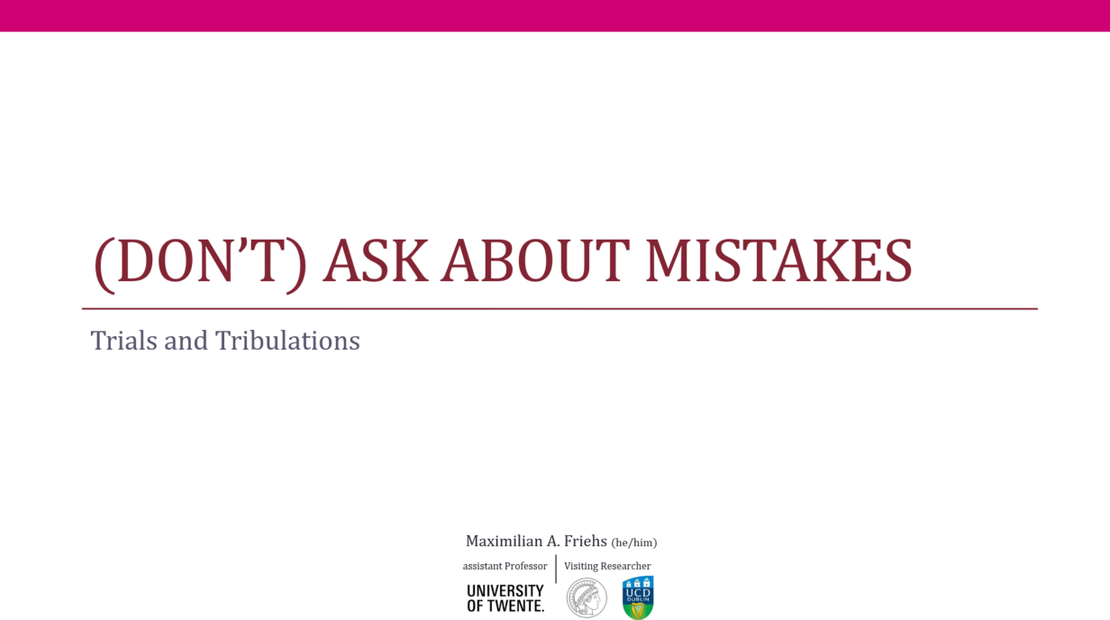
Soon thereeafter in April we met for a breakfest meeting sharing snacks and talking about the paper-writing experience. In May we organized a social event and had pizza together; way too much pizza.
On the 9th of July, shortly before the summer break, in a hands-on workshop Max demonstrated how to set up a tDCS study and what to pay attention to when using the device on participants.
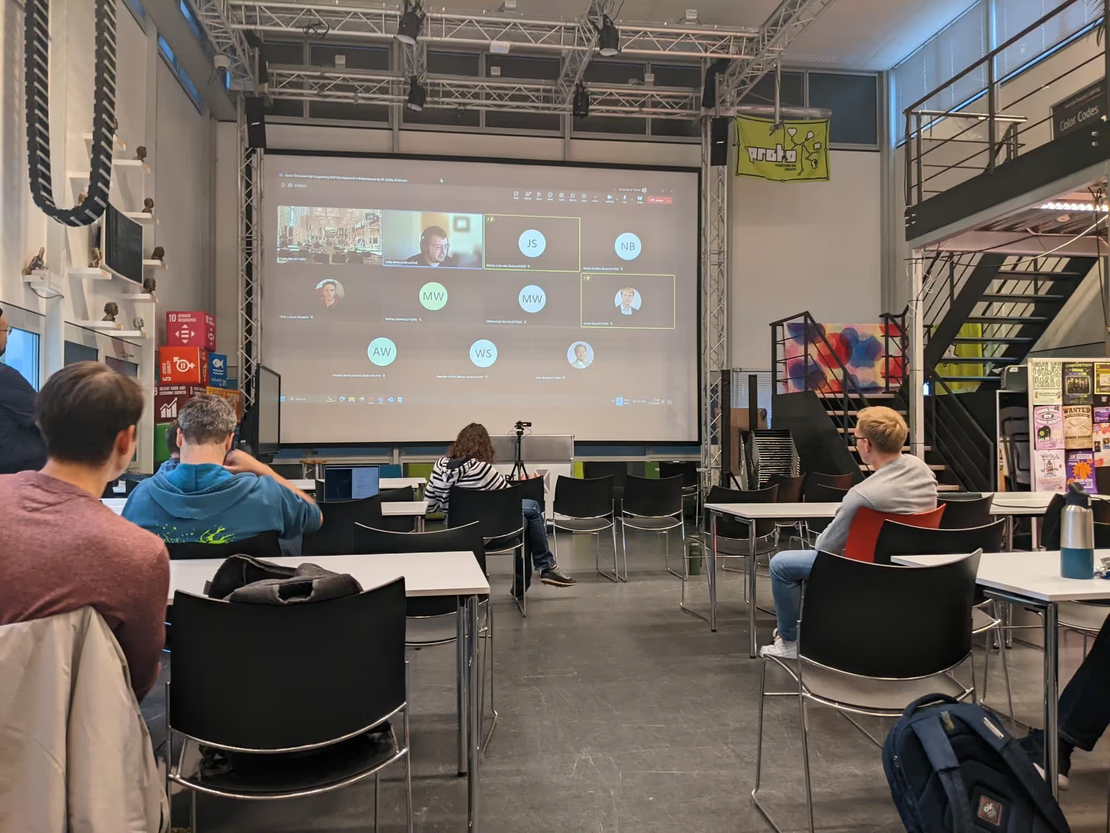
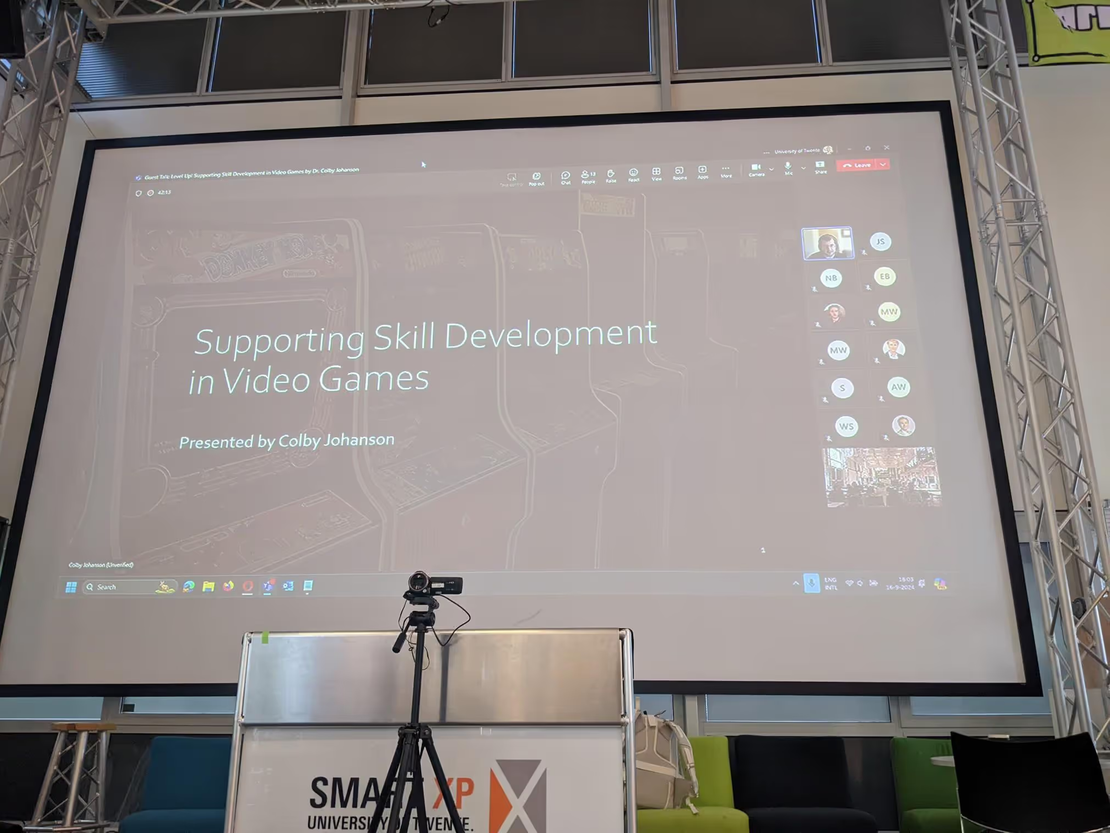
In September we were joined by Dr. Colby Johanson from University of Victoria (Canada) who gave a talk about "Level Up! Supporting Skill Development in Video Games". Thank you to our friends at CreaTe@EEMCS for lending us the perfect room for the occasion and joining in on the fun!
|
|
The October-Meeting was tainted by the budget cuts to higher education and sharing concerns about the consequences for universities in the Netherlands.
In our end-of-year meeting in December we had a fun time playing a psych-themes Pub Quiz and playing some GarticPhone. If you want to see some of the creations from that gameplay session, here you can sample some (note that all people present were able to speak German and English and thus the languages are mixed together).
2025
2025 Meetings
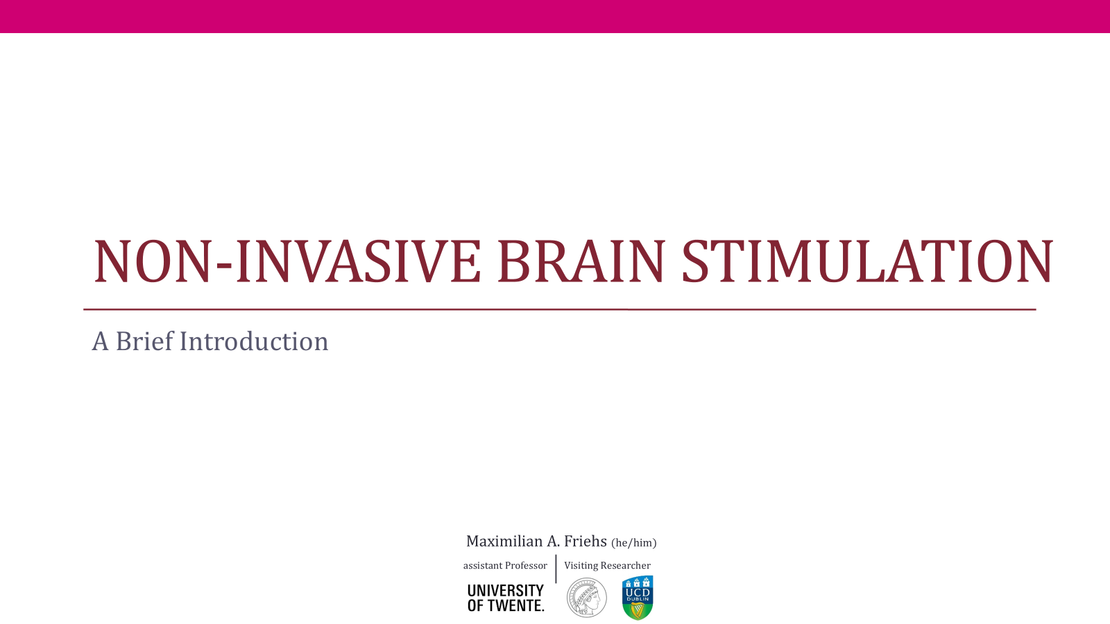
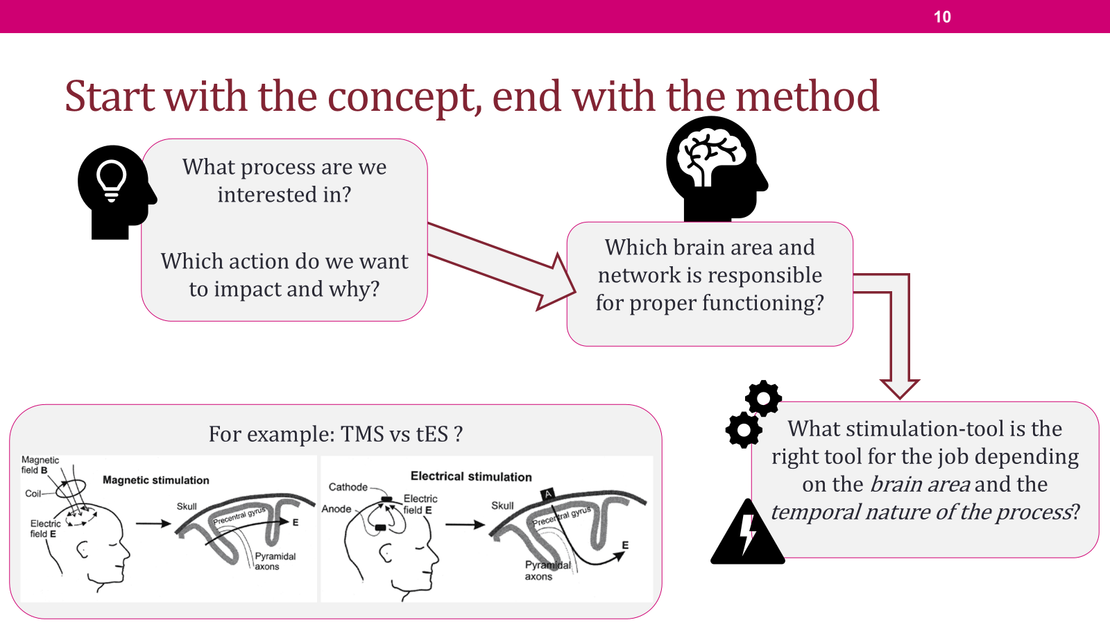
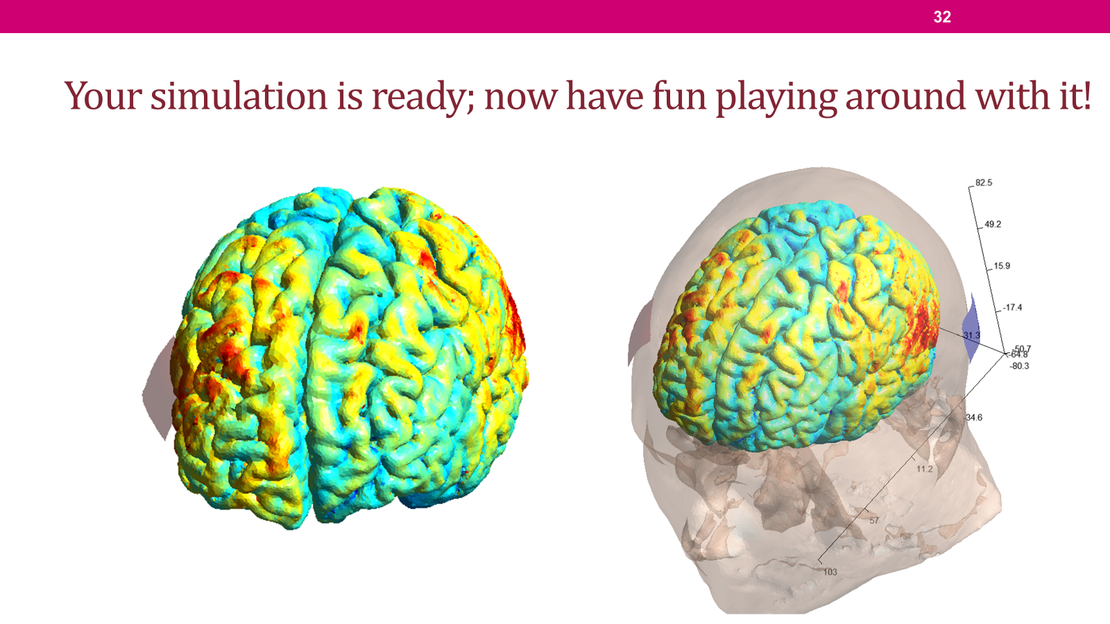
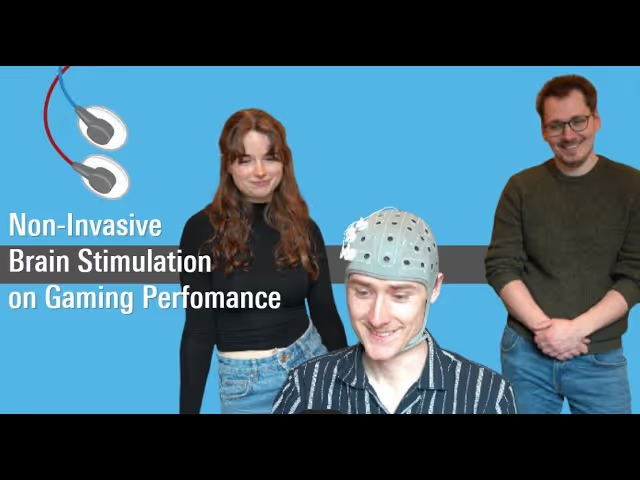
Starting off the year right, on the 6th of February, we had a nice workshop comprised of BSc, MSc and PhD students on non-invasive brain stimulation. During the workshop we discussed the upsides and downsides of certain brain stimulation methods and how they fit into the wide array of neuroscience tools. We explored together how certain brain areas are related to a specific task performance and the student drafted up a mock study to stimulate the relevant area.
|
|
| Some previous students at UT made a video about the MSc theses project as well! ![]() |
In Arpil we welcomed Michael Long the founder and CEO of Foolish Mortals Games (a Canadian independent game studio). He talked about the difficulties of interaction design, how to make games or other interactions "fun" and how to deal with personal challenges. The talk was open to all, but especially aimed at the Interaction Technology Master Students from EEMCS. Among other great games, Foolish Mortals released the game "Radio General" received a Games for Change Award in the Best Learning Game category. The game has also been used by Psychology and I-Tech students alike as a bases for thesis and course projects.
In June Max gave a presentation at the Psychology, Health and Technology Colloquium: in it about half of all references used were based on student research projects that were published under supervision! You can download the full slide set below. Check the references for yourself and see what kind of impact students can have - your work is seen and recognized!
In October Nico and Max planned to join the HExKoP 2025 in Trier, however since Nico got a brilliant new job after his MSc (congratulations!) he was not able to join. Thus Max held the talk about his thesis work in his stead.
Throughout the year we also had some social gatherings with snacks and drinks! This includes communal breakfasts, snack-break afternoons and after-work pizza-time!
2026
2026 Meetings
New year, new me! The Research Enthusiasts Club reaches out to others and starts going international. Of course we always had students from other counries and non-UT people in the club as well, but now we have made more friends.
In March Max gave two talks about the club, research in general and the possibility of students not only doing but also publishing their work in a scientific journal. The first talk was for the Student Neuroscience Network and the second for Ockham Honours Association.
|
|
xx
Conference visits by students
2024 HexKoP
2024 HexKoP
56th Autumn Meeting of Experimental Cognitive Psychology (HexKoP)
The 56th Autumn Meeting of Experimental Psychology, also known as Herbsttagung für experimentelle Kognitionspsychologie (HexKoP), is a small, traditional conference and is aimed at all colleagues, who use experimental or cognitive-psychological methods, as well as interested parties from related disciplines. 2024 this conference was hosted in Paderborn (Germany). For a link to the website click here: https://sug.uni-paderborn.de/sportwissenschaft/psychologie-und-bewegung/hexkop-2024
A team of three UT affiliates participated in the conference, two of whom were members of the Research Enthusiasts Club. Max was the third UT affiliated attendee and gave a talk about "Individualized Navigiational Guidance Systems for Emergency Escape Scenarios". Below are the uncensored opinions of the two students that attended:
I probably could not have picked a better conference to get a first glimpse of what research in practice looks like. It was a very familiar down-to-earth kind of conference with around 40 people in total. I did feel slightly out of place in the beginning as everyone else was already in the first years of their PhD or post-docs or (assistant-) professors.
But that feeling went away as I started talking to people about their talks and them being genuinely interested in the kind of topics I do during my master in Human Factors Engineering at the UT. The presentations themselves were somewhat challenging to follow on the first day. Mainly because of the different research areas other universities focus on. After the first day I slowly adapted to the speed and complexity of the talks, and it was uphill from there.
It was really fascinating to see outside of the UT’s research bubble and see what kind of contraptions or experiments they were using like a setup to test basketball fake outs or highly specialized Simon tasks to compare different dimensions of stimuli.
Overall, I would highly recommend going there if you are interested in going into research after your studies. It is FREE compared to pretty much all other conferences and you can attend as a student meaning you do not need to present a talk/poster unless you want to. Despite it being a conference of “German” psychologists it is full held in English!
Attending the HexKoP 24 was an exciting and enriching experience. As my first scientific conference, it was far beyond my expectations—in the best way possible. The presenters were not only passionate about their research but also patient and eager to explain every detail about their studies, which I found incredibly helpful, as I mostly did not understand everything right away.
The research presented was highly advanced and quite different from the more applied psychology I’m familiar with at the University of Twente. It focused on fundamental cognitive mechanisms, providing a new perspective on psychology for me. This contrast made the presentations even more captivating.
Most of the participants were either well into their PhDs or had already completed them, making it a valuable opportunity to learn about academic careers and get advice on navigating the world of research. The informal evenings with food and drinks provided a relaxed setting for deeper conversations, both professional and casual. The atmosphere at the conference itself and in the evening felt more like a friendly gathering than a formal conference.
If you ever get the chance to attend HexKoP, I highly recommend it. It offers a unique insight into the world of academia and is an excellent way to connect with passionate researchers while broadening your understanding of psychology.
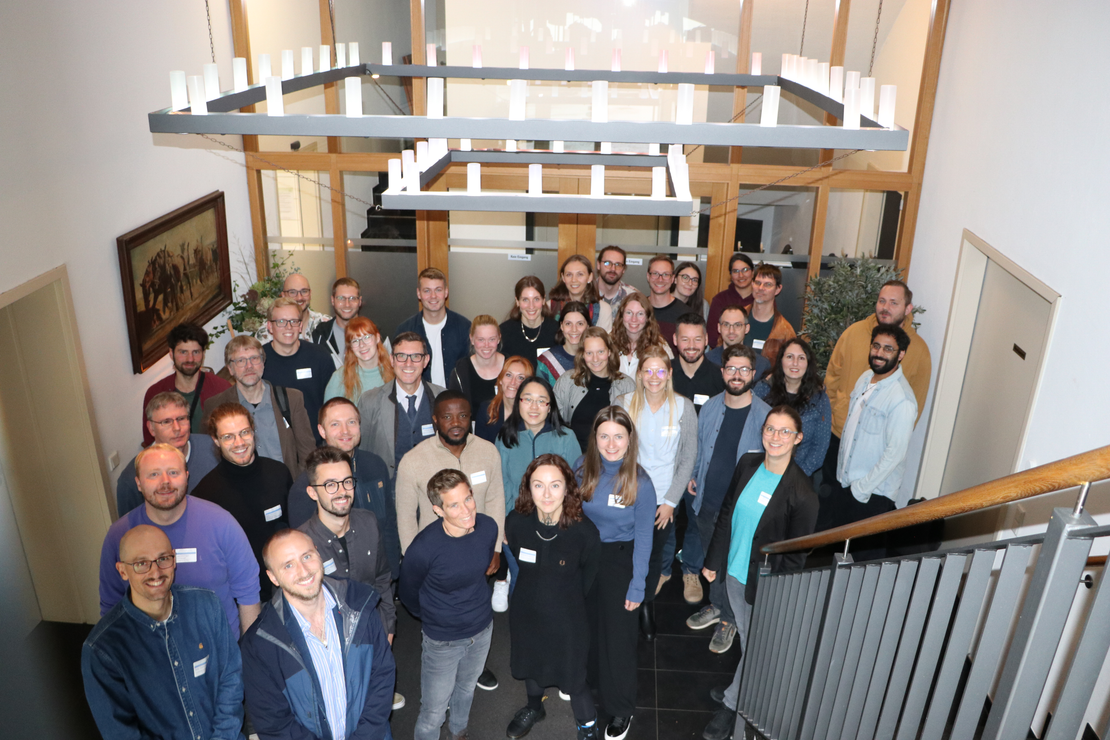
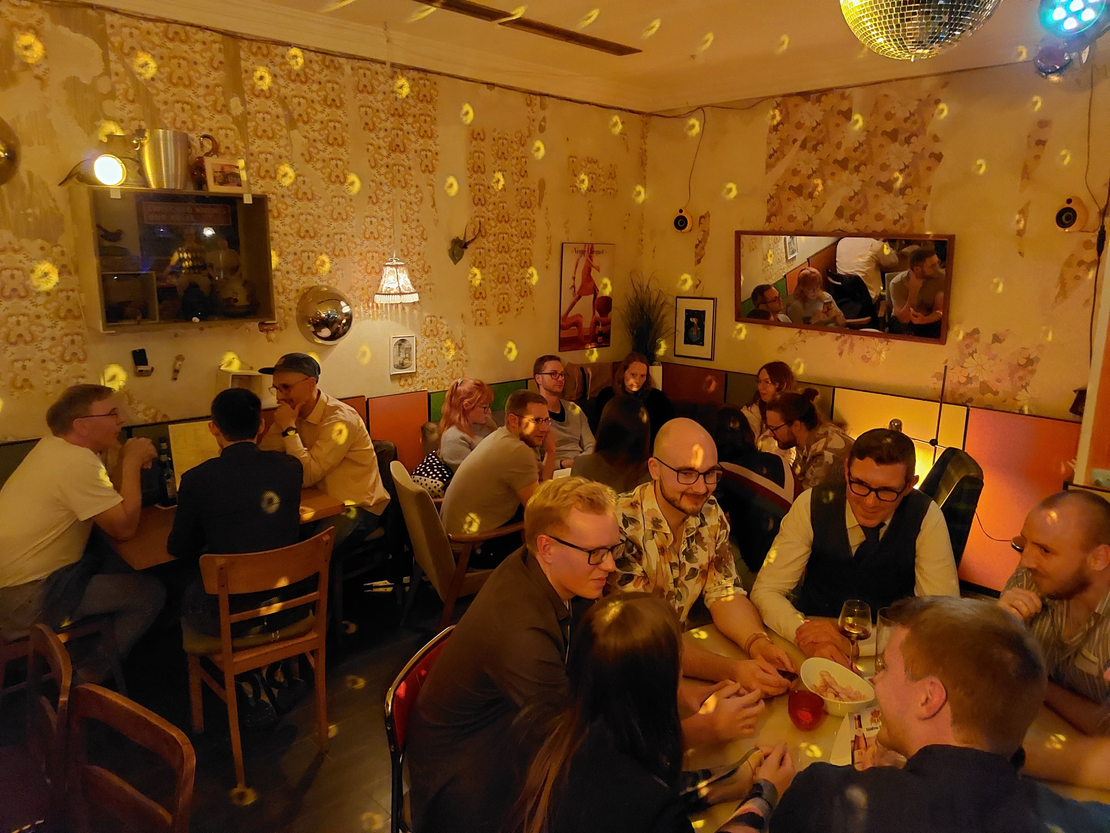
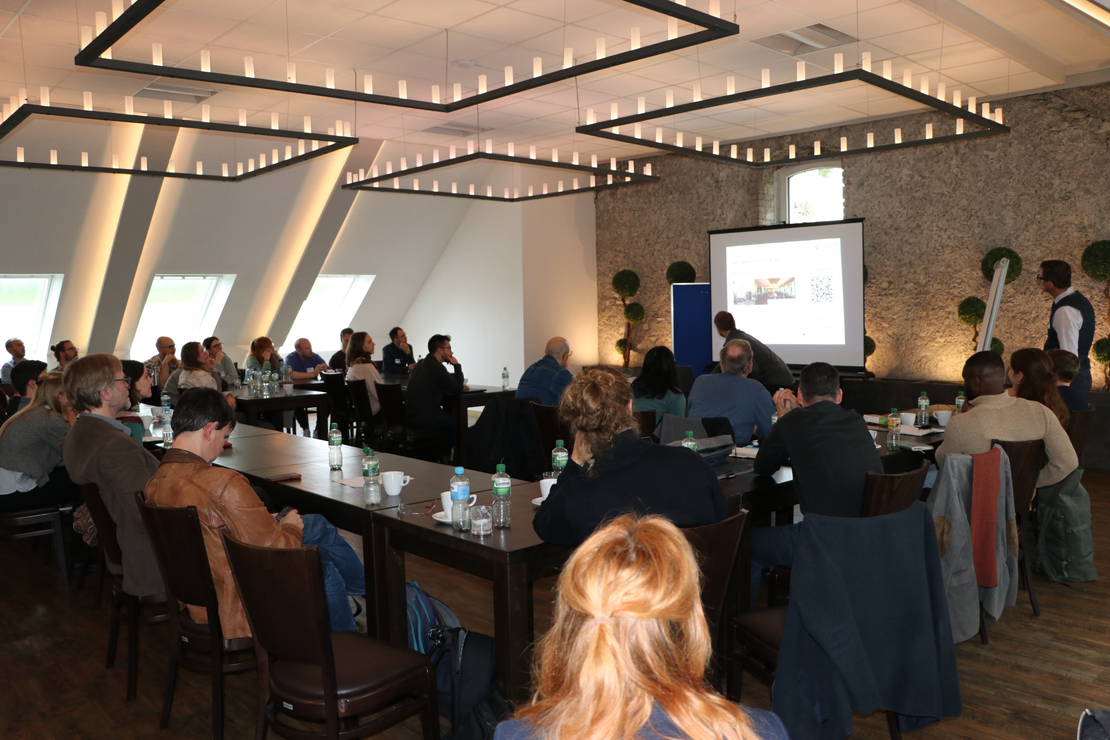
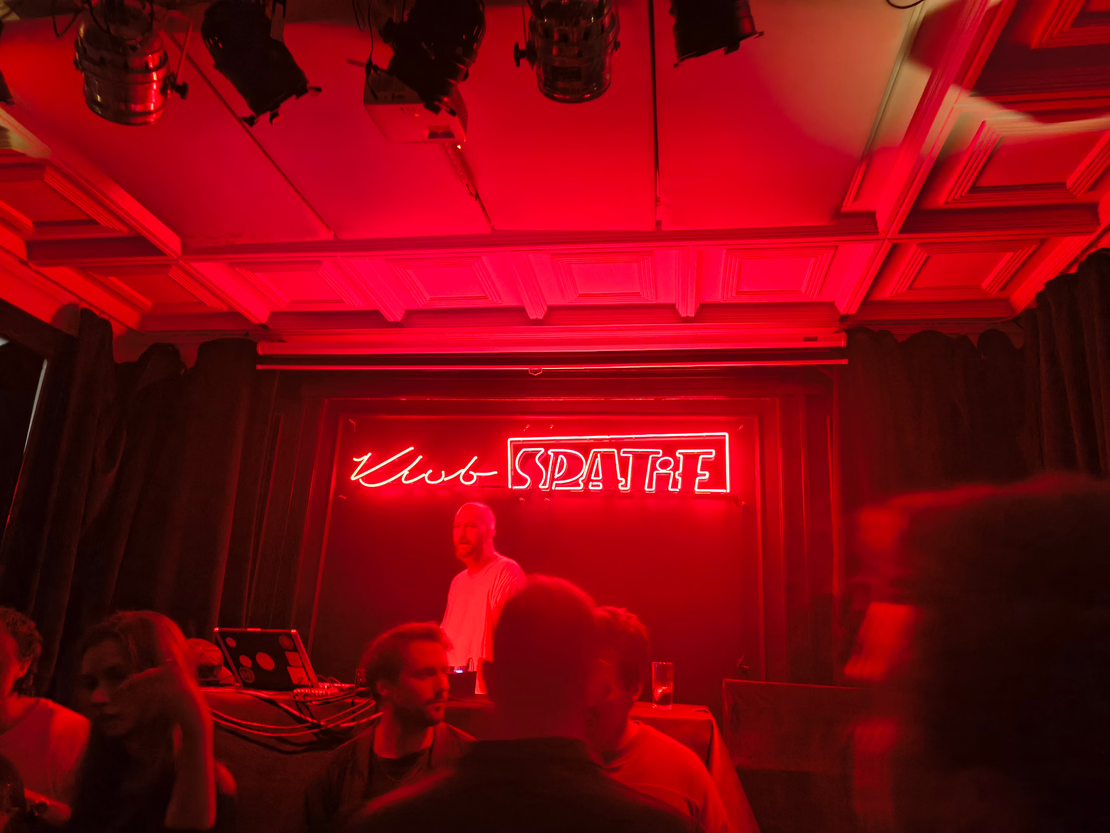
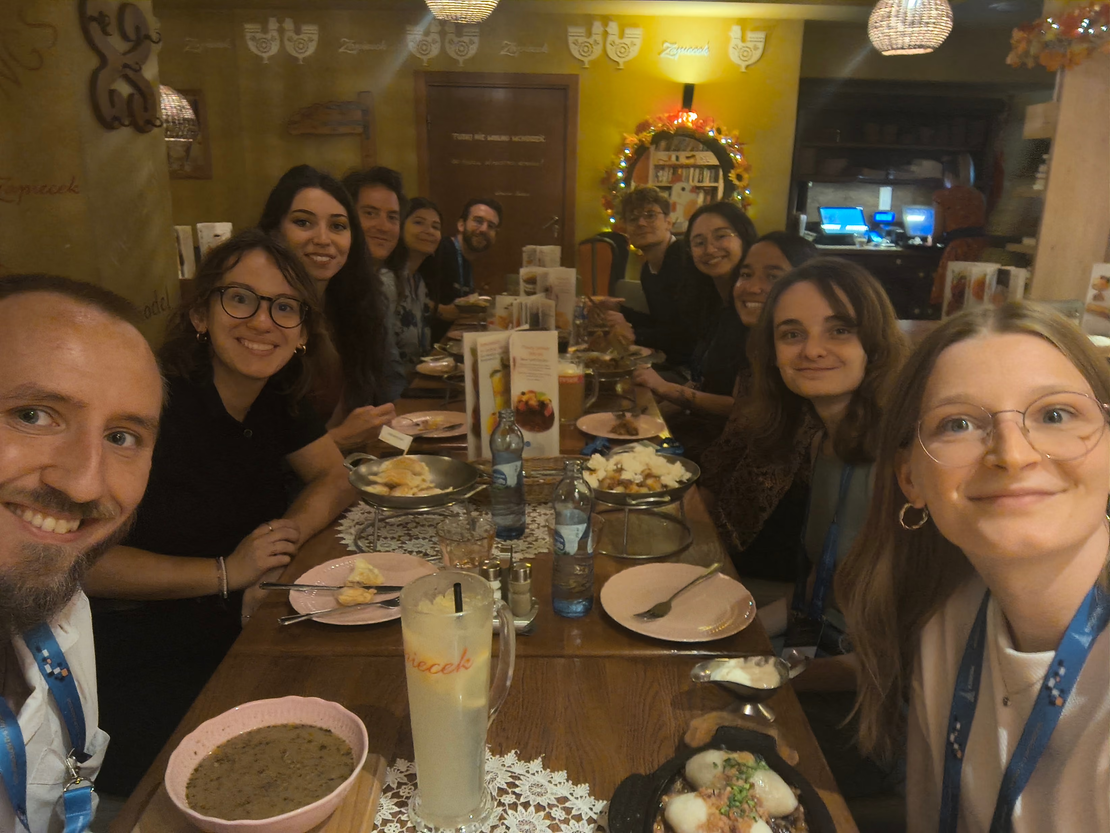
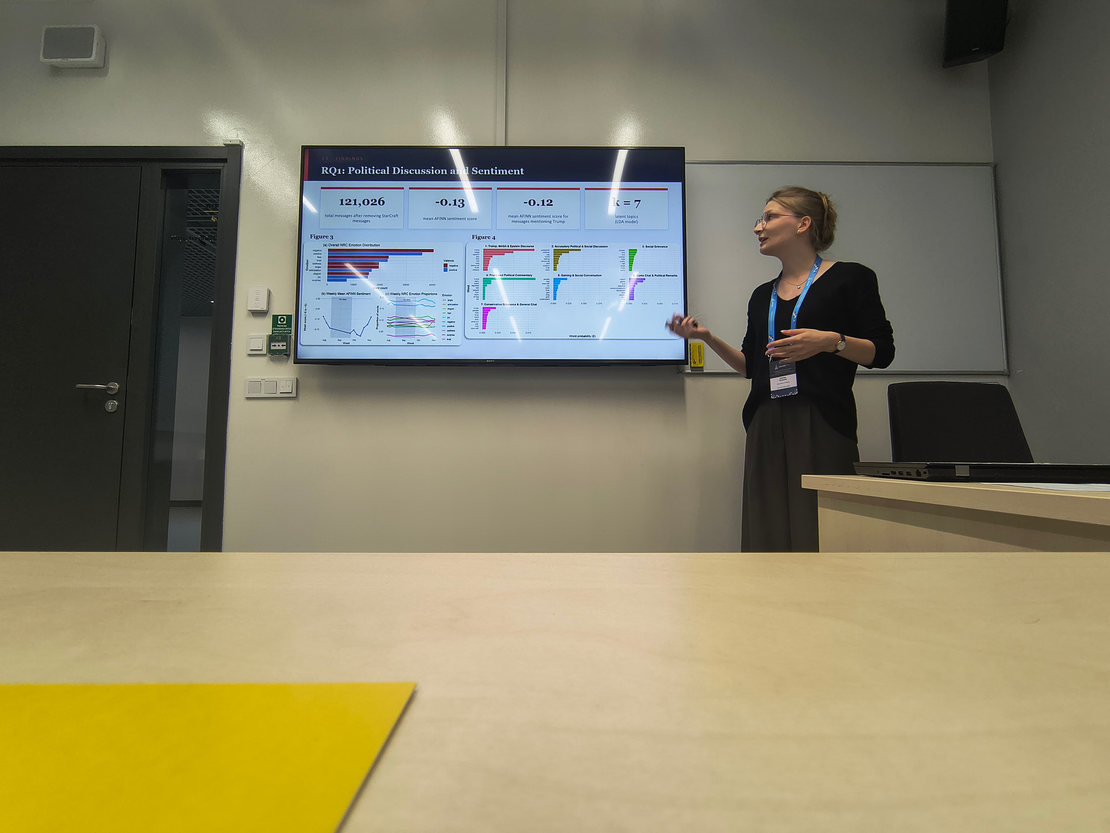
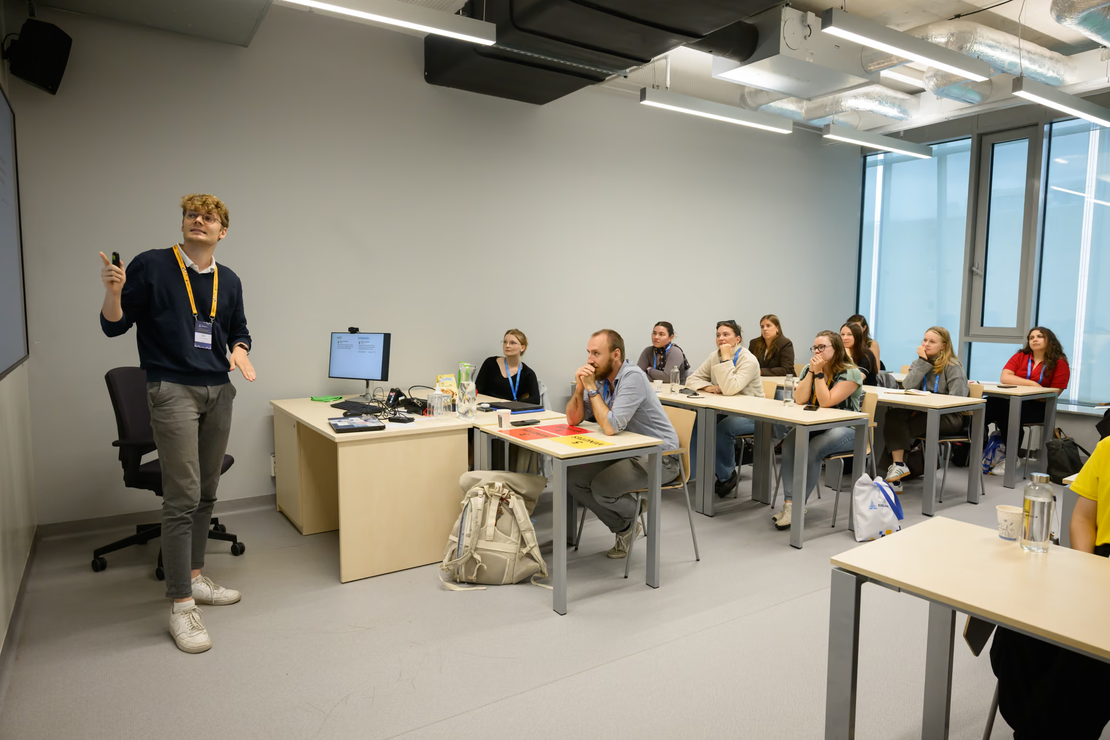
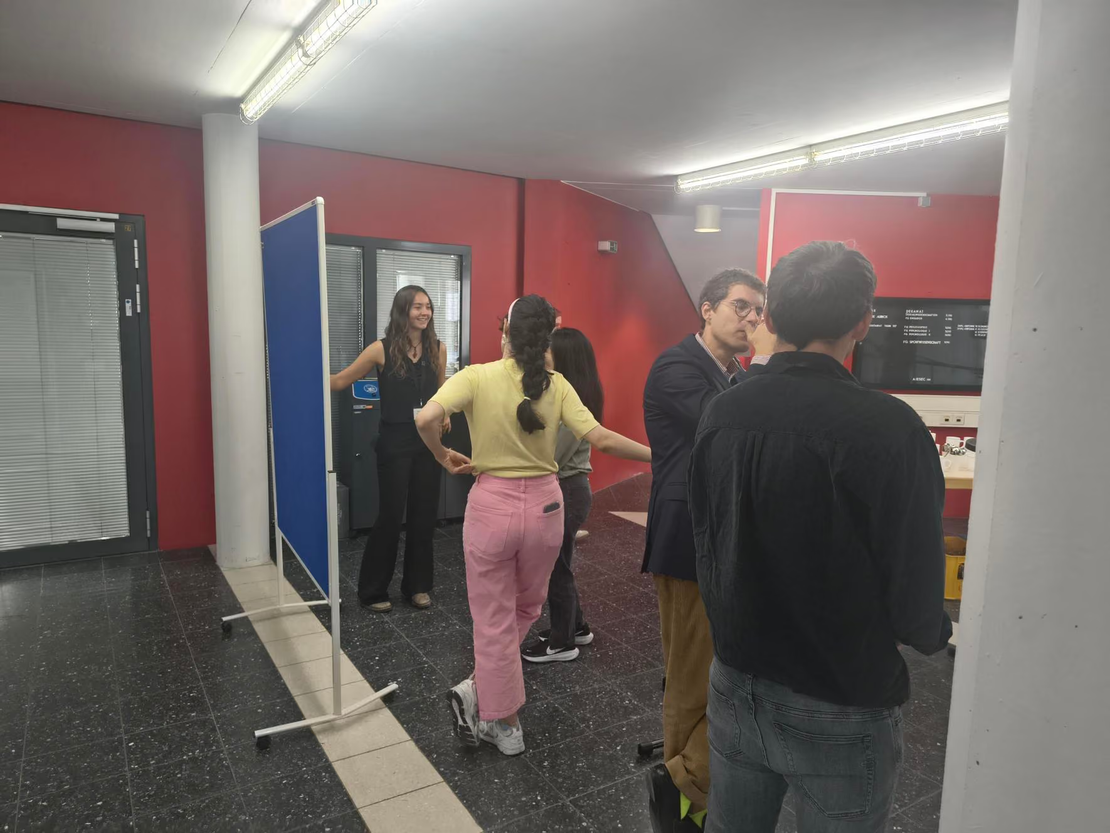
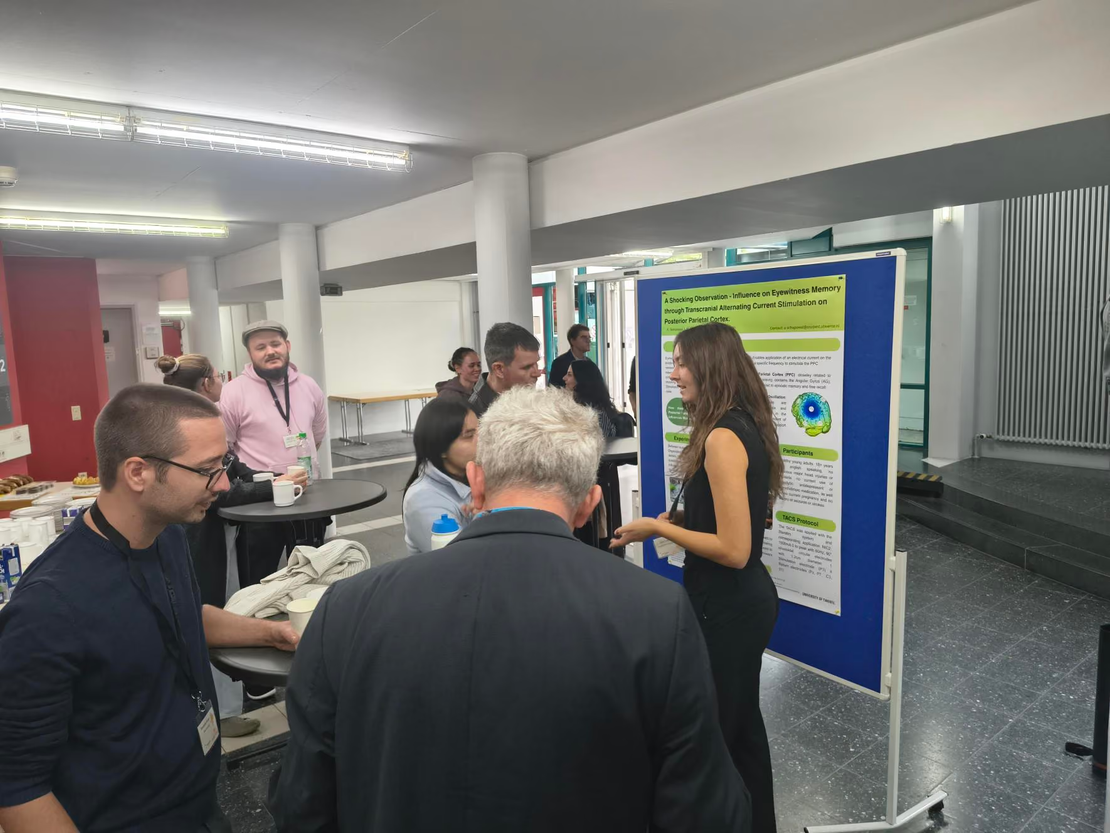
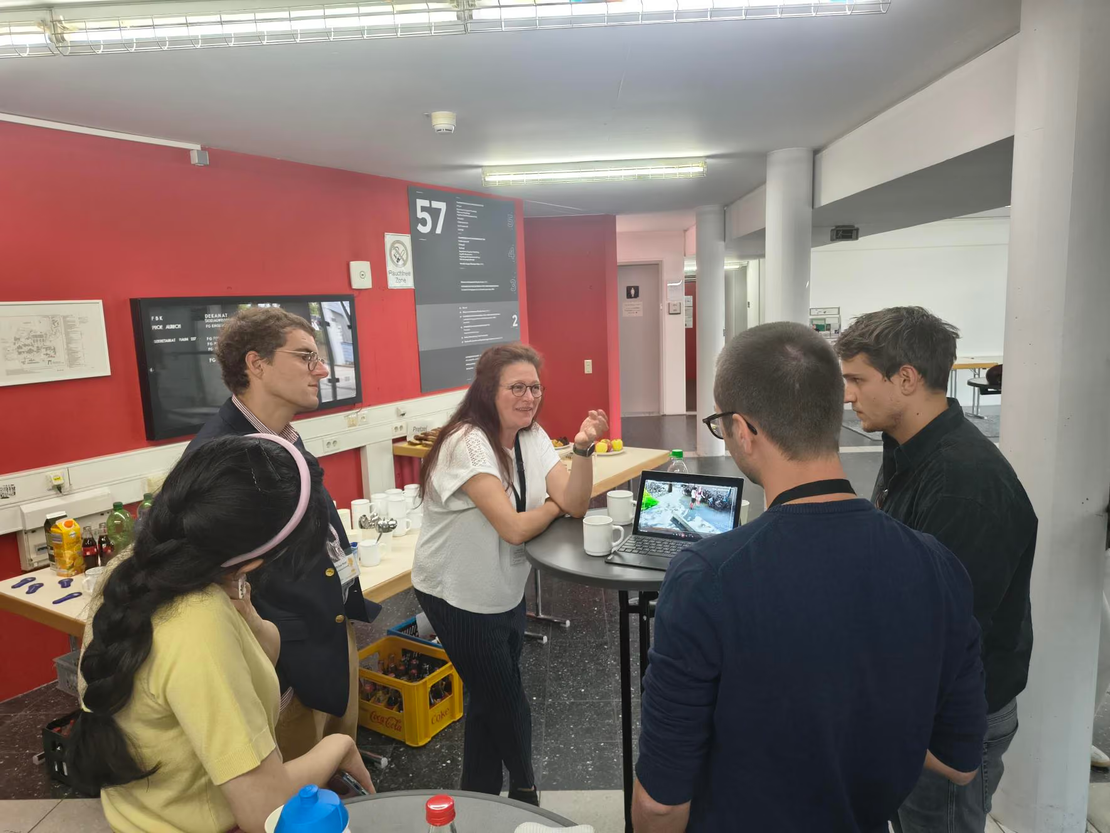
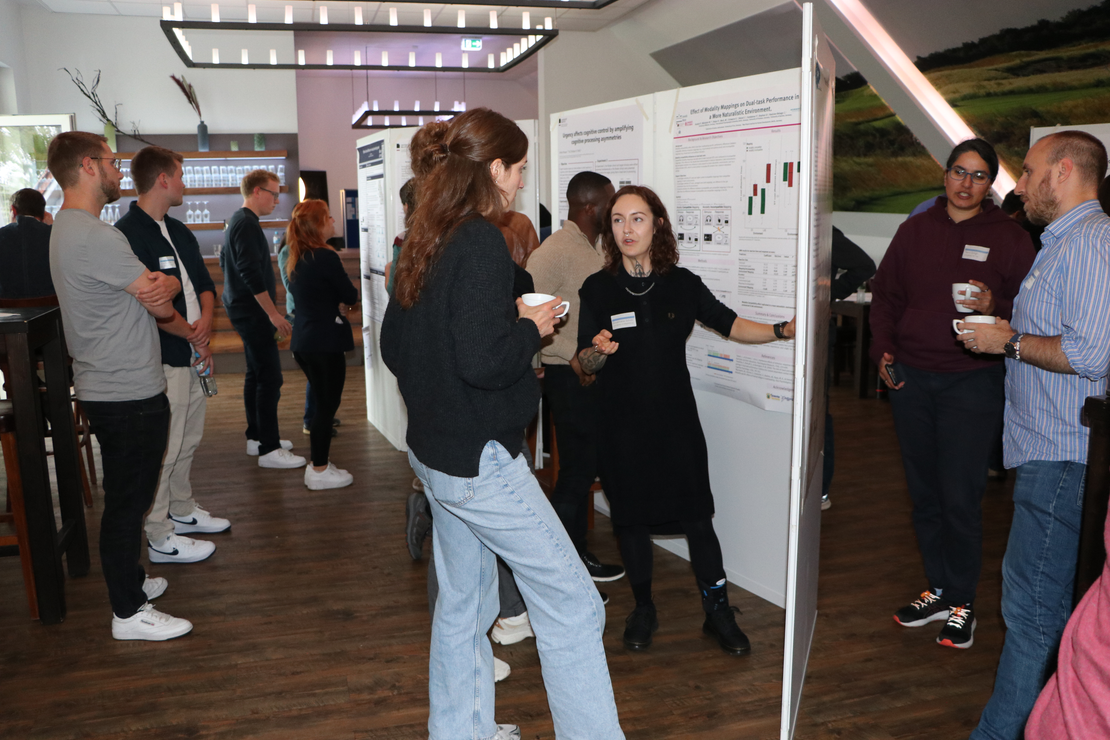
Some pictures of the conference:
|
|
|
|
2026 EuroCrim
2026 EuroCrim
to be done
2026 HexKoP
2026 HexKoP
to be done