
 science HealthIntimacy and AI: what can sex robots teach us about human relationships?A partner who always listens, never gets angry and does exactly what you want. What does that mean for how we think about intimacy? PhD researcher Maaike van der Horst investigates at the University of Twente how sex robots and digital AI partners are changing our ideas about relationships, desire and vulnerability.
 science HealthOlympic questions: why is menstruation still missing from sports data?The Milano Cortina 2026 Olympic Winter Games are the most gender-balanced Winter Olympics ever. According to IOC figures, nearly half of all participants are women, a clear step forward compared with previous editions.
 science HealthOlympic questions: is data the new doping?With the Olympic Games approaching, wearables are once again in the spotlight. Elite athletes measure everything: heart rate, sleep, recovery and stress. In some cases, this goes so far that sports federations step in, as recently happened with tennis player Carlos Alcaraz, who was no longer allowed to wear a wearable during the Australian Open. One thing is clear: data has become inseparable from elite sport. But what does all this mean for the average athlete, or for the average person in the Netherlands?
 science HealthCan recovery after cardiac arrest be predicted?After a cardiac arrest, patients and their families enter a period of deep uncertainty. Who will wake up? And what will life look like afterwards? UT PhD researcher Astrid Glimmerveen (TechMed Centre) studied brain signals that could help doctors better predict recovery and organise aftercare more effectively.
 science ClimateTwente clay captures CO₂ from biogasHow can CO₂ be captured without complex installations or high energy costs? A research team in Twente discovered that the answer was literally beneath our feet: clay. From that insight emerged CarbSorbTec, a University of Twente spin-off that uses a special clay material to remove CO₂ from biogas.
 science HealthHealthcare never stops — but neither does its emissions. Can we make it greener?Healthcare saves lives — but it also harms the planet. Globally, the sector is responsible for 4–5% of all greenhouse gas emissions, and in the Netherlands it’s around 7% — more than aviation. Hospitals run 24/7, consuming huge amounts of energy, cooling and ICT. They generate mountains of waste and use large quantities of raw materials. Pharmaceuticals end up in water systems, and transport of patients and supplies adds additional emissions. In short: there’s work to do. At the University of Twente’s TechMed Centre, researchers and partners tackle these challenges every day.
 science TechnologyFrom whisky to sick chickens: this electronic nose smells what you can’tAn electronic nose that can tell different whiskies apart? It might sound like a joke, but behind the idea lies a serious technology with significant impact. Dr Ir Sissi de Beer, scientist and programme director of Applied Physics at the University of Twente, is developing a portable sensor that, much like the human nose, can recognise scents. Handy at a whisky tasting, perhaps, but primarily intended to help farmers detect diseases in their livestock at an early stage — even before a vet would notice.
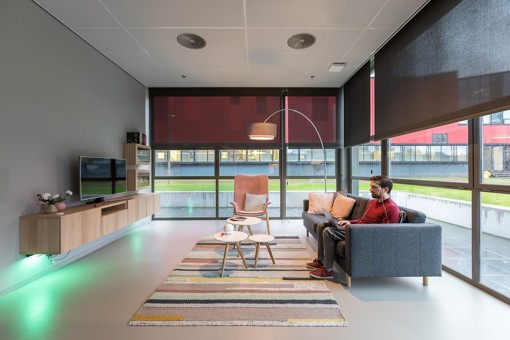 science HealthHow digital technology places less burden on healthcareImagine a digital flower that blooms when you hit your daily excercise goal or wilts when you miss a medication dose. Creative technology like this, designed by students and researchers at the University of Twente, is part of the network of the expertise Centre for Remote Monitoring & Coaching (eCMC), an initiative of TechMed Centre of University of Twente.
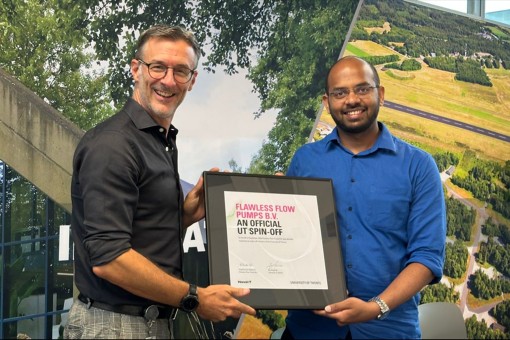 science HealthUT scientist Keerthi makes dream come true with his own spin-off companySome researchers start their PhD to contribute to fundamental research, while others dream of starting their own company based on their research. Keerthivasan Rajamani (Keerthi for short) was one of those entrepreneurial researchers. He founded UT spin-off Flawless Flow Pumps based on his research on magnetic pumps. He shares his journey from researcher to entrepreneur.
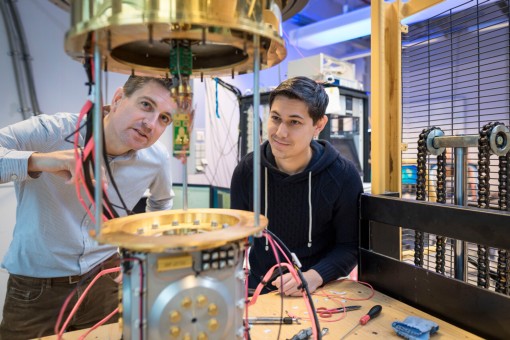 science Chip TechnologyOur tech is a huge energy guzzler, here's how we're changing itIf we continue like this, ICT applications will account for no less than twenty percent of our total electricity consumption by 2030. Data centers, AI, the many millions of questions we ask Google every day... It takes an enormous amount of computing power and therefore energy. This can and must change, agrees Professor Wilfred van der Wiel of the University of Twente.
 science HealthThis is the wheelchair of the futureWithin innovation cluster MedTech Twente, people are working on tomorrow's healthcare. UT alumnus Gabriel Costa and Stephanie Jansen, founders of spin-off company J58, talk about the importance of patient-centred innovations, the ecosystem in Twente and making an impact.
 science Chip TechnologyMini-lectures Zwarte Cross, episode 3: Chips, digital tastemakers from Dutch soilThe Universitent at the Zwarte Cross, the largest festival in the Netherlands, has been a successful concept for years. In this summer series you can watch the mini-lectures again. In episode 3, Guus Rijnders talks about computer chips.
 science Circular EconomyMini-lectures Zwarte Cross, episode 2: Beer cups and other plastics from sewage (video in Dutch)The Universitent at the Zwarte Cross, the largest festival in the Netherlands, has been a successful concept for years. In this summer series you can watch the mini-lectures again. In episode 2, Jeroen Cornelissen talks about the beer cups of the future.
 science DigitalisationMini-lectures Zwarte Cross, episode 1: Beer and IT, is it a good idea? (video in Dutch)The Universitent at Zwarte Cross, the biggest festival in the Netherlands, has been a successful concept for years. In this summer series, you can revisit the mini-lectures. In episode 1, Dr Ton Spil talks about beer and IT.
 science ClimateWill we be going on holiday in a hydrogen plane in 10 years' time?How can we make our holidays more sustainable? A question that concerns many engineers, scientists, and citizens. Emissions need to decrease, but in the aviation industry, that's not so simple yet. Research at the University of Twente is investigating a promising technology that could lead to hydrogen-powered airplanes: cryogenic superconductivity.
 science DigitalisationIdeal route for rubbish truck thanks to smart algorithmEvery resident of Twente knows them: the trucks of waste collector Twente Milieu driving through the streets to empty the green, orange or grey minicontainer. To ensure that the rubbish trucks empty the five million minicontainers annually as efficiently as possible, perfect route planning is needed.
 science HealthFake surgery: 'miraculous scientific research'Is 'band syndrome' (bloating after eating) a medical condition or a psychological problem? That question has occupied medical science for decades. Prof Bob Geelkerken, professor at the TechMed Centre at the University of Twente and surgeon at Medisch Spectrum Twente, uses a special method to dispel the question marks once and for all: fake surgery.
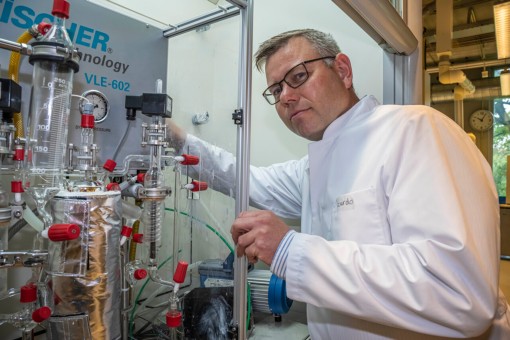 science Circular EconomyBreaking down waste and building it up like legoFor years, we've diligently sorted our waste, but a significant portion of the waste stream remains (yet) unrecyclable. The University of Twente, in collaboration with companies, is researching how to create new products from complex and 'wet' waste streams. This involves efficiently isolating chemical components used in new materials. The multi-year project ReBBloCS - Renewable Building Blocks from Complex and Wet Waste - began last year with a subsidy of €3.8 million from the Netherlands Enterprise Agency.
 science HealthThe rise of the virtual doctorIf a family member has an inherited heart condition, there is a chance that you have it too. Usually, you will then receive a letter with information and an invitation for an interview about possible DNA testing. Researchers at the University of Twente are now testing whether they can approach people via a virtual doctor.

Filter