smart wearables for sensing leg biomechanics in the wild
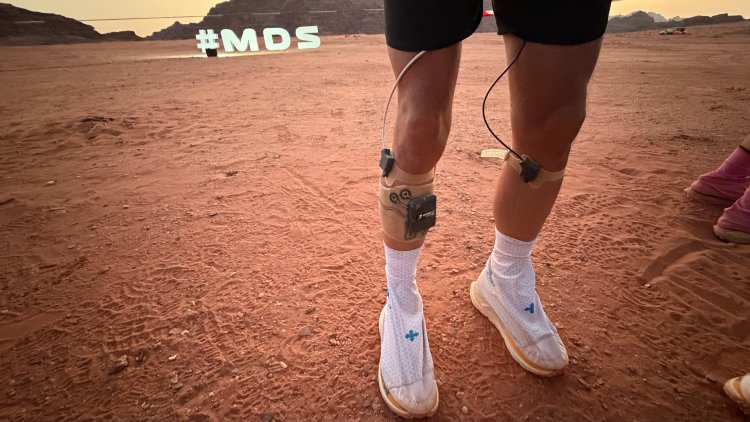 A unique first phase of Mission I.A.M. is completed: 3 MSc students and staff jointly developed a functional wearable sensor package with sEMG and IMU sensors. Not only that, the system operated succesfully in the Wadi Rum desert in Jordan. Withstanding sand, heat, and sweat during a 3 stage ultra marathon of 120 km.
The device worked during the event, and still does! The system proved to be robust enough to withstand the sand, dust, heat, and sweat. Not the usual surroundings and way of operating this kind of equipment (no proper shutting down the electronics, but hard switch-off when running out of power for example) - but is handled all that smoothly.
And there's more! We successfully collected data over the course of the three racing days. We're still processing the raw data, but the sensors did their job
An incredible achievement of the Robotics Centre University of Twente staff, researchers, and students! All experience and expertise came together, with an unstoppable drive to deliver a working system to take to Jordan.
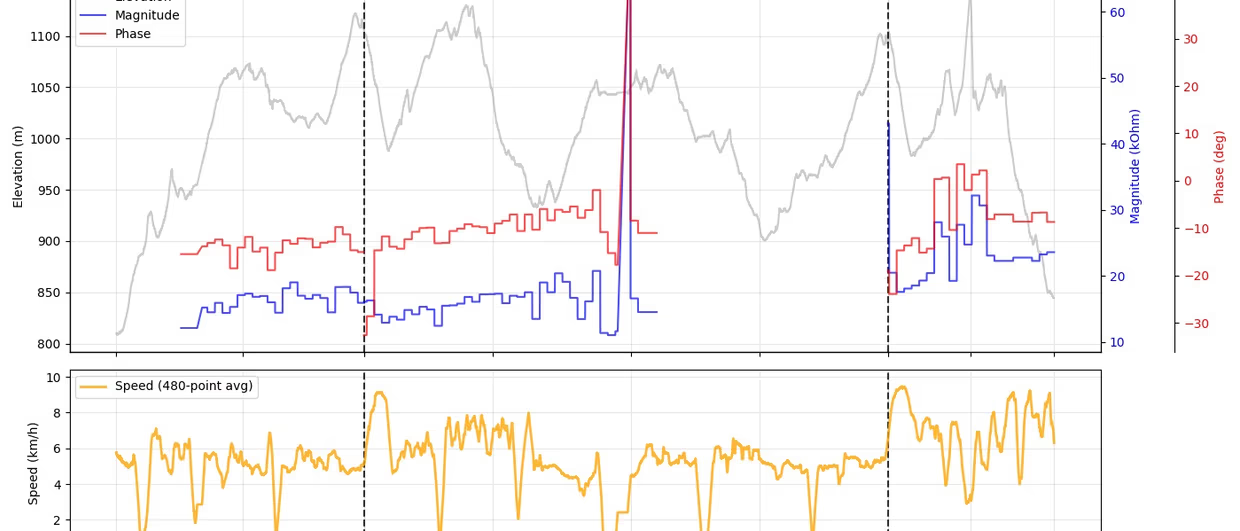
This integration allows recording of neuromuscular and biomechanical data during prolonged, real-world performance — an experimental setup rarely achievable outside controlled laboratory environments. See images below.
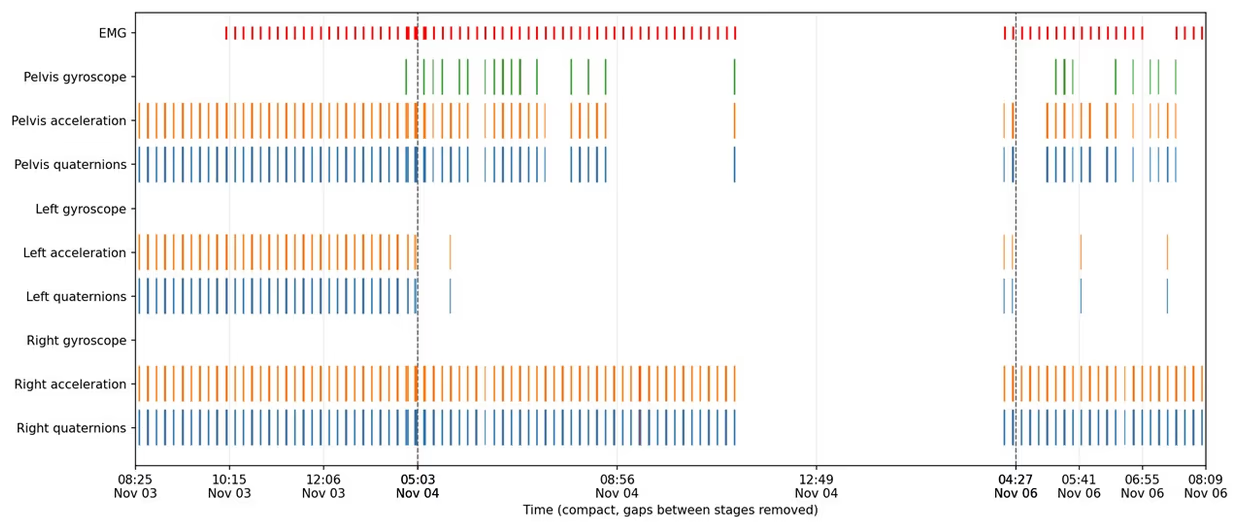
Short overview of the system:
- Surface EMG sensors, to capture muscle activation signals as well as electrode impedance;
- sEMGs connected to dedicated electronics, developed by Martijn Schouten at RaM - Robotics and Mechatronics Research Group and TMSi — an Artinis company.
- Inertial Measurement Units (IMUs) for motion tracking by Xsens Health & Sports | Movella;
- Raspberry Pi computers as compact, on-body data loggers;
- The band: 4 different materials 3D printed with integrated (sEMG) electronics, 3 additional materials were used to create a casing for the Raspberry Pi
- A comfortable and breathable wearable sensor setup even after 120 km of desert.
- System Integration by the Biomedical Signals and Systems Group, Robotics and Mechatronics Research Group, and the NEUBOTICS Lab of the Robotics Centre University of Twente