smart wearables for sensing leg biomechanics in the wild
 A unique first phase of Mission I.A.M. is completed: 3 MSc students and staff jointly developed a functional wearable sensor package with sEMG and IMU sensors. Not only that, the system operated succesfully in the Wadi Rum desert in Jordan. Withstanding sand, heat, and sweat during a 3 stage ultra marathon of 120 km.
The device worked during the event, and still does! The system proved to be robust enough to withstand the sand, dust, heat, and sweat. Not the usual surroundings and way of operating this kind of equipment (no proper shutting down the electronics, but hard switch-off when running out of power for example) - but is handled all that smoothly.
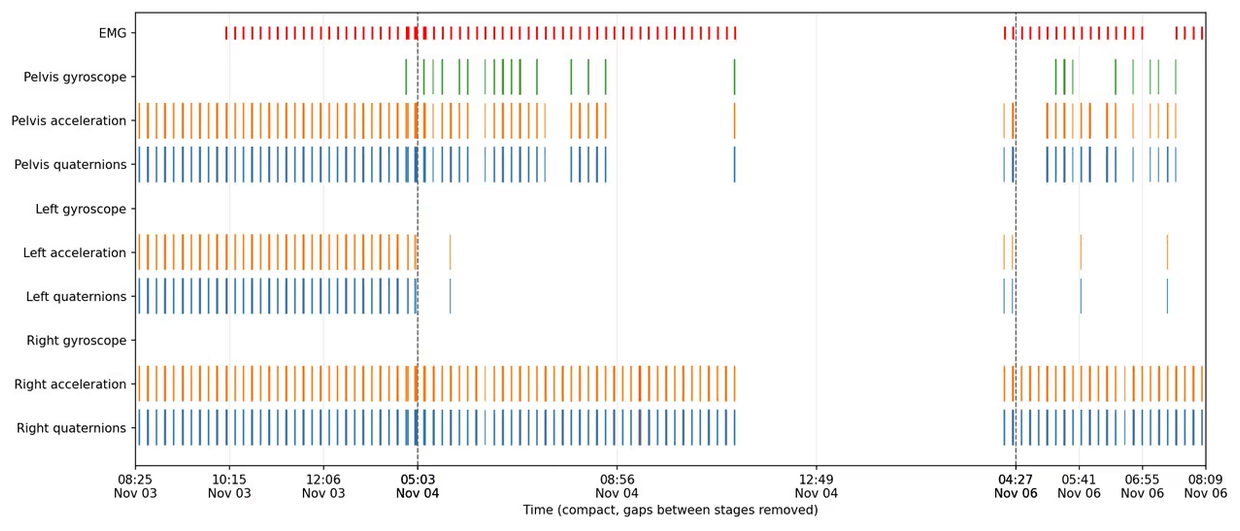
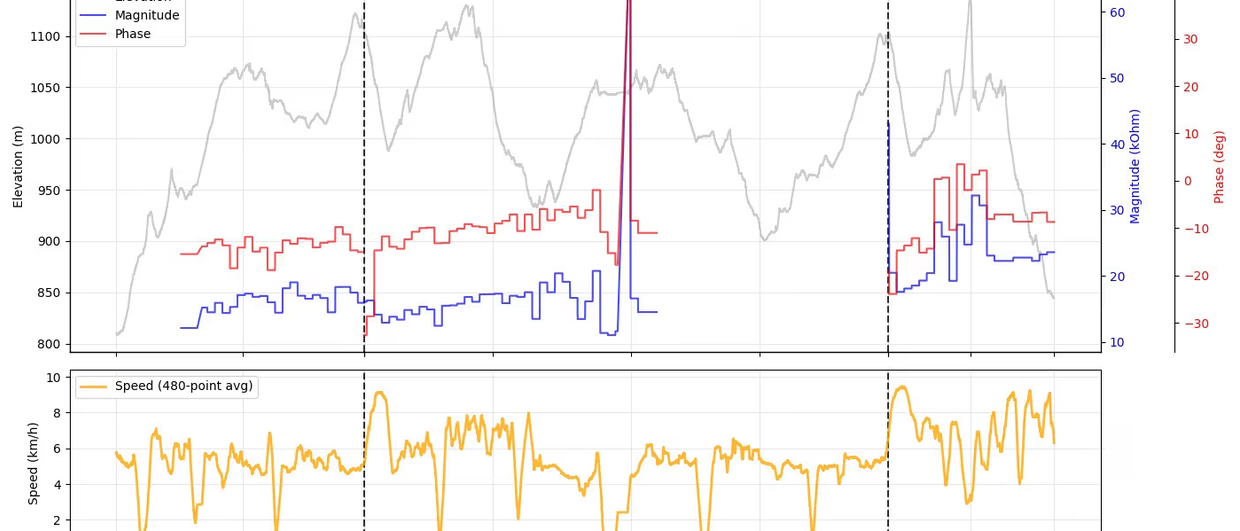
And there's more! We successfully collected data over the course of the three racing days. We're still processing the raw data, but the sensors did their job
An incredible achievement of the Robotics Centre University of Twente staff, researchers, and students! All experience and expertise came together, with an unstoppable drive to deliver a working system to take to Jordan.
This integration allows recording of neuromuscular and biomechanical data during prolonged, real-world performance — an experimental setup rarely achievable outside controlled laboratory environments. See images below.
Short overview of the system:
Previous projects involved

| 
|
|
|
|
CEINMS-RT | SimBionics |
|
|
|
Involved People & Groups
People
Research Groups
Neubotics Lab
BE’s Neuromechanics and Neuromuscular Robotics Lab: We interface robotic technologies with the neuromuscular system to improve movement. We apply modelling and signal processing, in a translational way, to develop novel real-time bio-inspired assistive technologies. Our goal is to establish a roadmap for discovering fundamental principles of movement at the interface between humans and wearable robots ultimately for improving human health. Check out our pages:
Biomedical Signals and Systems (BSS)
Biomedical Signals and Systems is a multidisciplinary group based in Electrical Engineering, focussing on finding solutions for medical challenges via signal and system analysis. Advanced (ambulatory) sensor technology combined with our broad knowledge of the human body as a dynamic system enables (eHealth) technology to improve the prevention, diagnosis, and treatment of sensory, motor and internal dysfunction in clinical and home/self-care settings. Our research helps to improve the quality of life of the elderly, people with chronic diseases and rehabilitation patients.
Robotics and Mechatronics (RaM)
The Robotics and Mechatronics (RaM) group is active on both fundamental and application-driven topics in the field of robotics. We develop novel fundamental paradigms and physically based methodologies, which we then translate in the Lab into demonstrators and prototypes. The area of robot application is mostly in healthcare and inspection and maintenance. The research is embedded in the TechMed and DSI Institutes. In RAM the NIFTy (Nature Inspired Fabrication & Technology) focuses on the 3D printing of structures with embedded sensors and actuators. The RAM 3D print lab has an extensive array of 3D printers allowing them to print from very soft to rather stiff materials. Electrical conductivity is provided by carbon black doped materials like thermoplastic polyurethane (TPU) or poly-lactic acid (PLA). The available 3D printers allow for up to 5 materials to be printed in one print. A more recent and explorative material we are working on is carbon black doped silicone.
Robotics Centre
The Robotics Centre is a dynamic hub where research, education, innovation, and broad community intertwine. With our human-centred robotics approach, we develop solutions for pressing challenges in healthcare, industry and society that improve life. Our innovation centre speeds up R&D through joint innovation roadmaps and consortia, accelerating breakthroughs. We innovate and collaborate with students, researchers, business partners, NGOs, governments, and the media to develop robotic solutions that truly benefit society.