Building a resilient future.
Our aim is to increase the resilience of societies to disaster impacts by integrating climate adaptation and disaster risk reduction. We carry out research and train students in advanced data/image analysis (such as machine learning, computer vision, and geomatics engineering), hazard, vulnerability and risk modelling, and develop and implement resilience-building strategies at the local level.
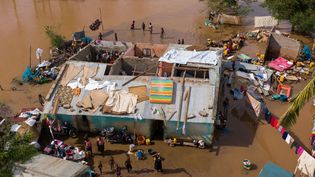
The world is experiencing an alarming increase in the number of disasters due to interlocking factors such as climate change, population growth, urbanisation, conflicts, epidemics, and migration. Extreme events, including floods, storms, heatwaves, landslides, droughts, and wildfires, now often aggravated by climate change, can interact with other hazards like earthquakes and volcanic eruptions and trigger devastating cascading impacts across sectors, threatening food and water security, causing health impacts, conflicts and migration.
The growing threat
A key challenge is how multiple risks compound, requiring much more sophisticated analysis and risk management than in the case of single hazards. A key example is the simultaneous increase in the risk of droughts and increasing extreme rainfall, threatening health, food and water security, and sometimes even causing displacement and conflicts. Without effective integration of climate adaptation and disaster risk reduction, communities remain vulnerable to these destructive events. The need for resilient societies is more urgent than ever.
Our approach to disaster resilience at ITC
At ITC, we develop and apply geospatial technologies in a multidisciplinary context to predict and monitor hazards and disaster impacts, thereby generating early warnings and informing efforts to reduce risk. In the process, we assess disaster impacts, such as physical and functional damages, as a basis for more efficient disaster response and recovery, and to build back better with reduced risk. Our tools include hazard (occurrence probability and intensity) and risk (impacts as a function of vulnerability and exposure). A unique characteristic of our approach at ITC is that we often do this in close partnership with and in direct support of organisations such as the Red Cross or UNDRR.
Making a real impact
At ITC, our mission is to create real-world impact, primarily in the Global South. We do this by advancing disaster resilience through innovative research and practical solutions. We are committed to Sustainable Development Goals such as SDG 13 (combat climate change and its impacts) and SDG 11. Our projects tackle critical challenges, enabling communities worldwide to prepare for, respond to, and recover from disasters. Below are three example projects that we are proud to work on. You can also check our Major Project Database for more disaster resilience projects at ITC.
Geo-information Science & Earth Observation
Contribute to solving some of the world's most pressing challenges by mastering the acquisition, analysis, and processing of geo-information data.
5 Specialisations Master of Science 2 years Full-time English-taught 3 Joint programmes
Disaster Resilience
Focus on disaster risk reduction, preparedness, response, and resilience - especially in the context of climate change.
Master of Science 2 years Full-time English-taught 2 Joint programmes
Free specialisation
The Free specialisation is designed for students who would like a bit more flexibility. You can create your own learning pathway to achieve your career goals with the help of an adviser.
Master of Science 2 years Full-time
Geospatial Artificial Intelligence (GeoAI)
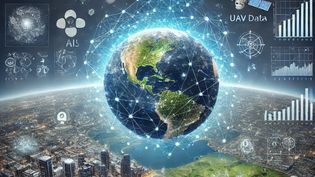
Harnessing the power of technology to automate the analysis and interpretation of large and complex spatial datasets like satellite images, UAV data, and local sensor data.
Master of Science 2 years Full-time English-taught 3 Joint programmes
Resources Security
Gain knowledge and skills in quantitative remote sensing to map, model, monitor and manage water, earth and natural resources through an interdisciplinary approach.
Master of Science 2 years Full-time English-taught 2 Joint programmes
Urban and Land Futures
Learn to tackle social, environmental, economic, and land tenure challenges in urban and regional areas.
Master of Science 2 years Full-time English-taught 2 Joint programmes
Humanitarian Engineering
Do you want to tackle complex humanitarian crises worldwide? This Master’s helps you develop sustainable, socio-technological solutions to challenges faced by underserved and marginalised communities.
2 years Full-time English-taught
Spatial Systems & Society
Natural disasters, poverty, food shortages, epidemics, and climate change: learn to tackle society’s complex challenges through urban planning, socio-economic insights and spatial data.
Master of Science 2 years Full-time English-taught
In addition to our master's programmes, ITC offers a range of online courses through our
Geoversity platform. Expand your skills, stay up to date with the latest in technology and innovation, and join a global community of learners. With tailored content designed to match your interests, Geoversity offers a journey of personal growth and discovery.
Start exploring today and make an impact with Geoversity!
Meet some of our experts
Are you interested in collaborating with ITC on disaster resilience? Whether you’re looking to study, partner on a research project, access local expertise, join a course, or simply brainstorm ideas, we’re here to connect with you. Feel free to reach out—your ideas and questions are always welcome! Please contact prof. Cees van Westen or any other expert we have at ITC on disaster resilience.