In the Spectroscopy Laboratory, we characterize, identify, and map materials by analysing their spectral properties. Our facilities support advanced spectroscopic and remote sensing research, providing laboratory and field measurements across a broad range of wavelengths and applications.
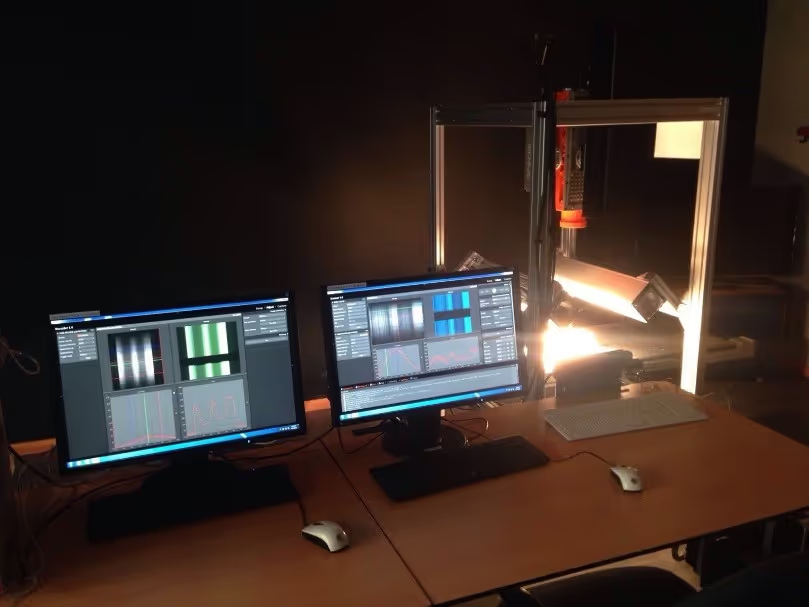
Our Specim hyperspectral imaging system consists of two imaging spectrometers covering the visible, near-infrared (VNIR), and short-wave infrared (SWIR) spectral regions. The cameras acquire both spectral and spatial information, allowing materials and surfaces to be characterized based on their spectral signatures.
Depending on the selected optics and accessories, the cameras can be configured to scan stationary samples in the laboratory or to acquire hyperspectral imagery of outdoor scenes and targets in the field.
Hyperspectral imaging is particularly valuable for detecting variations related to chemical composition and material properties that may not be visible in conventional imagery.
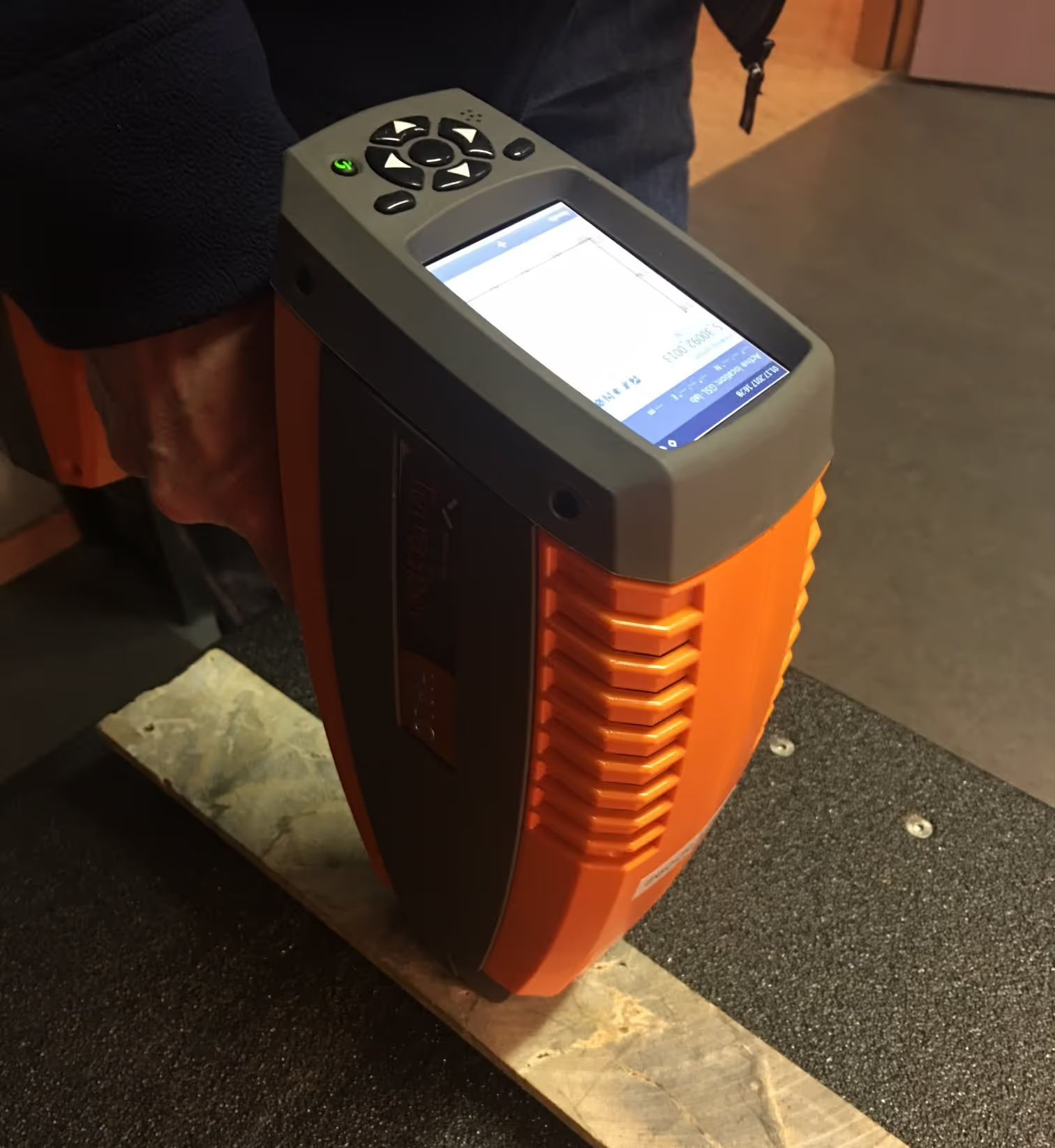
The ASD TerraSpec Halo is a portable, handheld VIS-NIR-SWIR spectrometer designed for rapid, non-destructive mineral identification in the field or laboratory. It covers the full 350–2500 nm spectral range, allowing diagnostic absorption features associated with a wide variety of minerals to be measured.
The instrument provides immediate mineral identification directly in the field using contact measurements and integrated mineral-identification software.
The ASD FieldSpec 3 is a portable field spectroradiometer designed for high-quality spectral measurements across the visible, near-infrared (VNIR), and short-wave infrared (SWIR) regions.
Covering a spectral range of 350–2500 nm, the instrument can measure reflectance, transmittance, radiance, and irradiance, making it suitable for both field and laboratory research. Typical applications include vegetation and soil analysis, geology and mineral identification, environmental monitoring, and remote-sensing validation (ground truthing).
The Spectral Evolution SR-6500 is a portable, high-resolution spectroradiometer designed for detailed spectral measurements in both field and laboratory environments. It covers the full 350–2500 nm spectral range, from the visible and near-infrared (VNIR) through the short-wave infrared (SWIR).
Its high spectral resolution makes it particularly suitable for identifying subtle absorption and reflectance features in materials. Typical research applications include geology and mineral identification, vegetation and soil studies, environmental monitoring, remote sensing, and ground-truth measurements.
The Bruker VERTEX 70 is a laboratory Fourier Transform Infrared (FTIR) spectrometer used for detailed spectral characterization of materials. The system enables measurements of reflectance and emissivity spectra in the thermal infrared, covering the MWIR and LWIR regions from 2.5 to 16 µm, typically at a spectral resolution of 4 cm⁻¹.
The instrument is primarily used to analyse solid samples, including rocks, minerals and soils, but can also be applied to biological and other materials such as leaves and eggshells.
An integrating sphere enables measurements of absolute directional-hemispherical diffuse reflectance, providing well-characterized laboratory spectra that can be compared with thermal infrared observations acquired by airborne and spaceborne remote-sensing sensors.
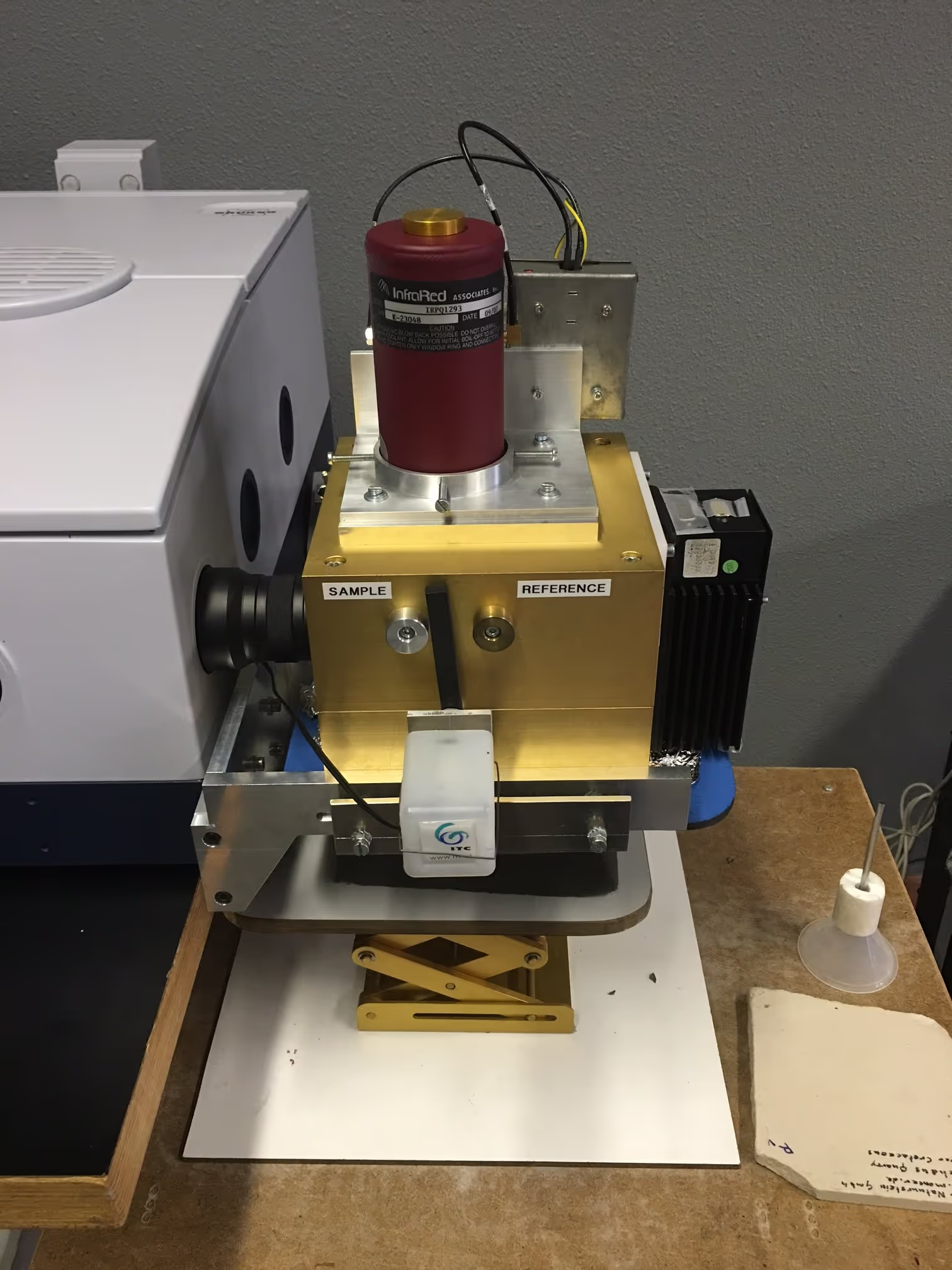
The MIDAC Illuminator M4401-F is a portable Fourier Transform Infrared (FTIR) spectrometer designed for thermal infrared spectroscopy in both field and laboratory environments. It enables measurements across the 2.5–20 µm spectral range, covering the mid-wave and long-wave infrared (MWIR and LWIR) regions.
Equipped with dedicated fore optics and a liquid-nitrogen-cooled MCT detector, the system provides sensitive measurements of thermal radiance and can be used to derive emissivity spectra of natural and artificial materials. It is particularly suitable for research involving rocks and minerals, soils, vegetation and plant canopies, and thermal remote sensing.
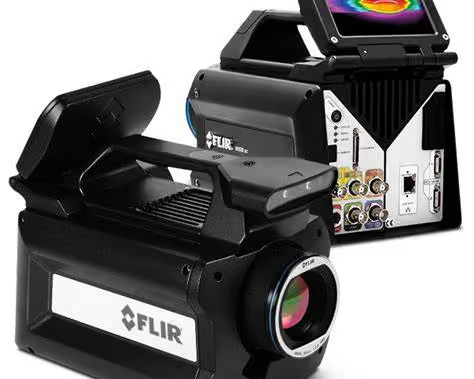
The FLIR X6570sc is a high-performance, cooled long-wave infrared (LWIR) thermal imaging camera designed for scientific research and high-speed thermal measurements. It operates over the 7.7–9.3 µm spectral range and combines high thermal sensitivity with fast image acquisition, making it suitable for monitoring rapid temperature changes and dynamic processes.
Specifications | |
IR Resolution | 640 x 512 |
Pitch | 15 µm |
Spectral Range | 7.7- 9.3 µm |
Thermal Sensitivity/NETD | < 25 mK (20 mK typical) |
Integration Time | 10 µs to 20,000 µs |
Video Output | DVI 1080p |
Accuracy | ±1°C or ±1% of the reading |
Standard Temperature Range | 5°C to 350°C (41°F to 662 °F) |
Camera f/number | f/2.0 |
Available lenses | 25 mm - 22° x 17°- USL Motorized 50 mm - 11° x 8.8°- USL Motorized 100 mm - 5.5° x 4.4°- USL Motorized |
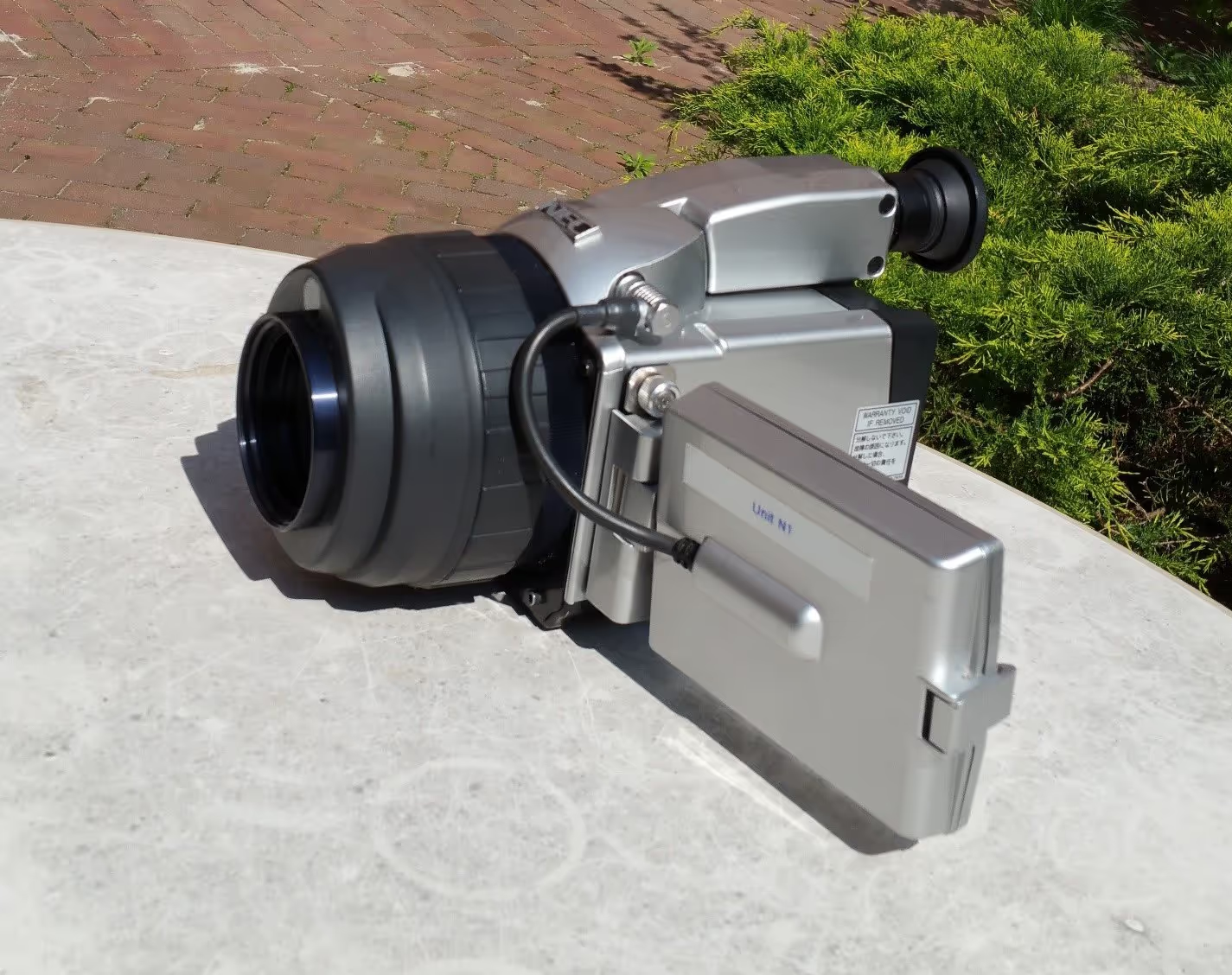
The NEC Thermo Tracer TH9100 is a portable infrared thermal imaging camera designed for non-contact surface temperature measurements. Operating in the 8–14 µm long-wave infrared (LWIR) region, it produces thermal images that allow spatial variations in surface temperature to be measured and visualized.
The camera is suitable for both field and laboratory research, with applications including environmental monitoring, vegetation and soil studies, building and infrastructure assessment, thermal mapping, and remote-sensing research.
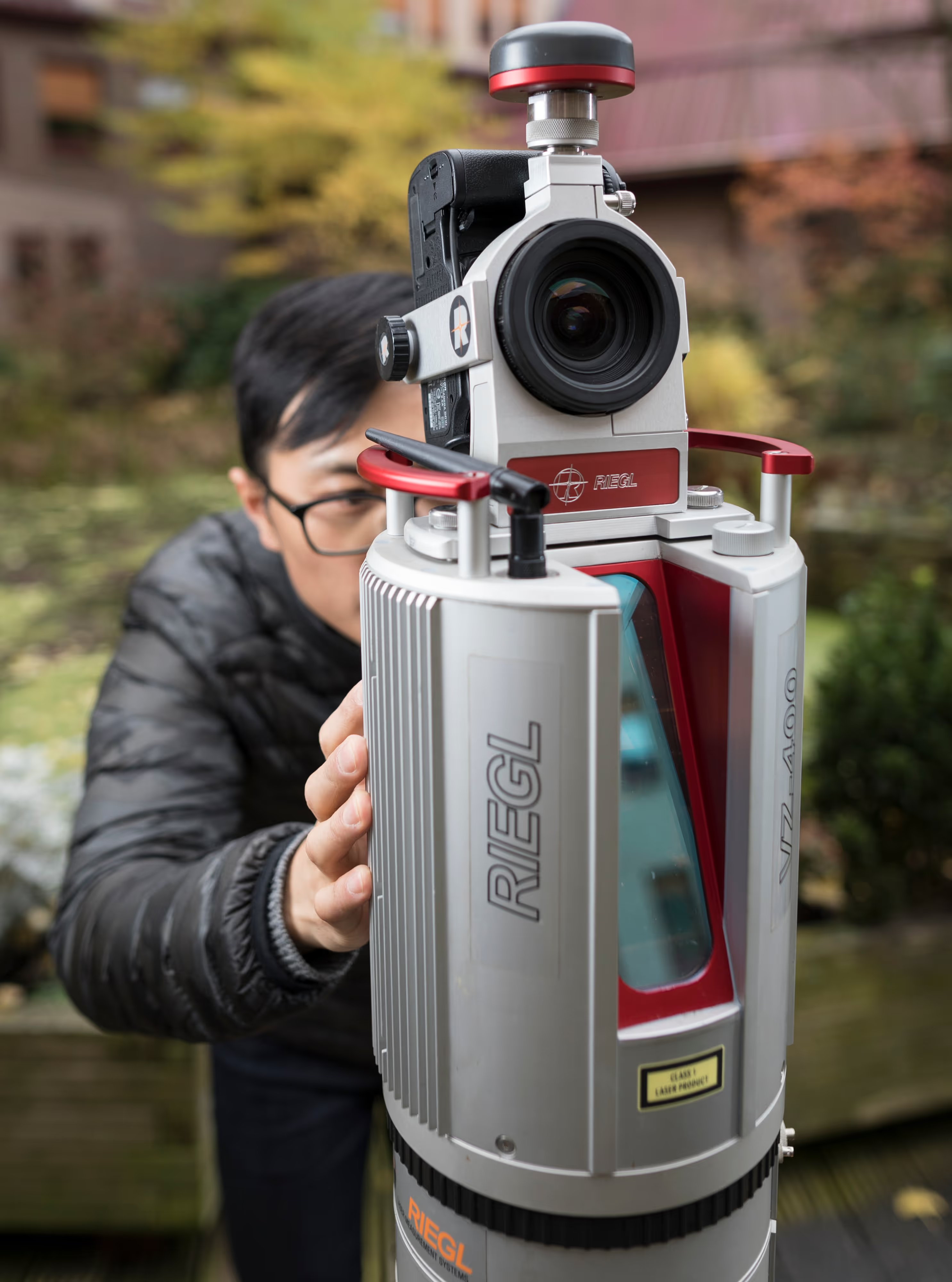
The RIEGL VZ-400 is a high-performance terrestrial laser scanner (TLS) designed for accurate and detailed 3D mapping of objects, structures, and natural environments. It uses LiDAR technology to rapidly collect large numbers of three-dimensional points, producing dense 3D point clouds that can be used to analyse surface geometry and terrain.
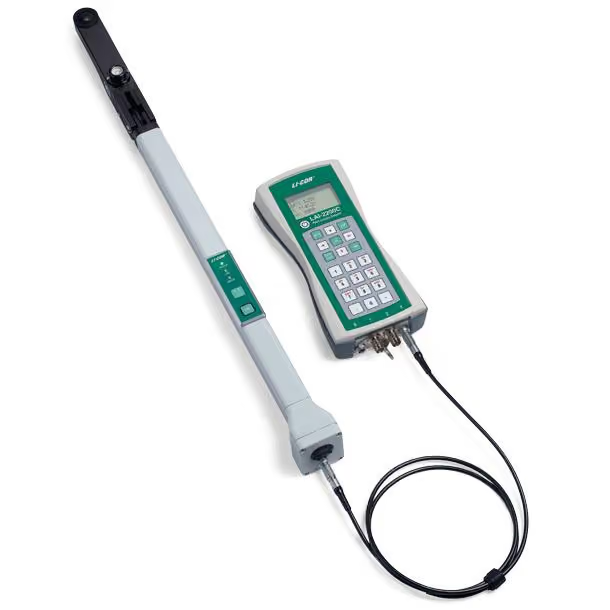
The laboratory is equipped with several generations of plant canopy analyzers, including the LAI-2000 and LAI-2200/C, for non-destructive characterization of vegetation canopy structure.
These instruments are primarily used to estimate Leaf Area Index (LAI) by comparing light measurements taken above and below the vegetation canopy. LAI is an important parameter for assessing vegetation structure, crop development, treatment effects, and seasonal changes.
Data acquisition is relatively straightforward and consists of a series of above- and below-canopy measurements, which can be repeated to improve statistical reliability. Careful measurement design and data interpretation are important to account for factors such as canopy structure, illumination conditions, and spatial variability.
The laboratory is equipped with several portable and laboratory-based leaf area measurement systems for accurate characterization of leaf size, shape, and related morphological parameters.
The ADC AM350 is a compact, field-portable instrument for accurate and non-destructive measurement of leaf area. It combines a high-resolution scanner with integrated data and image storage, allowing measurements to be performed directly in the field or laboratory.
Leaves can be measured using the integrated scan board or on a suitable flat surface, providing a flexible system for plant and vegetation research.
The LI-3000C is a portable scanning system designed for non-destructive leaf area measurements in the field or laboratory. As the sensor head is moved across a leaf, the system records leaf area, length, average width, and maximum width.
With an area resolution of 1 mm², the LI-3000C is particularly suitable for repeated measurements where leaves need to remain attached to the plant or intact for further analysis.
The LI-3100C is a laboratory area meter designed for fast and precise measurements of both small and large plant samples. It provides selectable area resolutions of 1 mm² or 0.1 mm², offering flexibility for different sample sizes and research requirements.
The system is particularly suitable for high-throughput leaf area measurements where collected or detached samples can be analysed efficiently.
The SC-1 Leaf Porometer is a portable instrument designed for rapid and accurate measurement of stomatal conductance in leaves. It provides a practical, non-destructive method for assessing plant–atmosphere gas exchange under field or laboratory conditions.
Rather than significantly altering the conditions around the leaf, the SC-1 determines stomatal conductance by measuring the water-vapor flux from the leaf through the stomata to the surrounding environment. This makes it particularly useful for studying plant responses under natural environmental conditions.
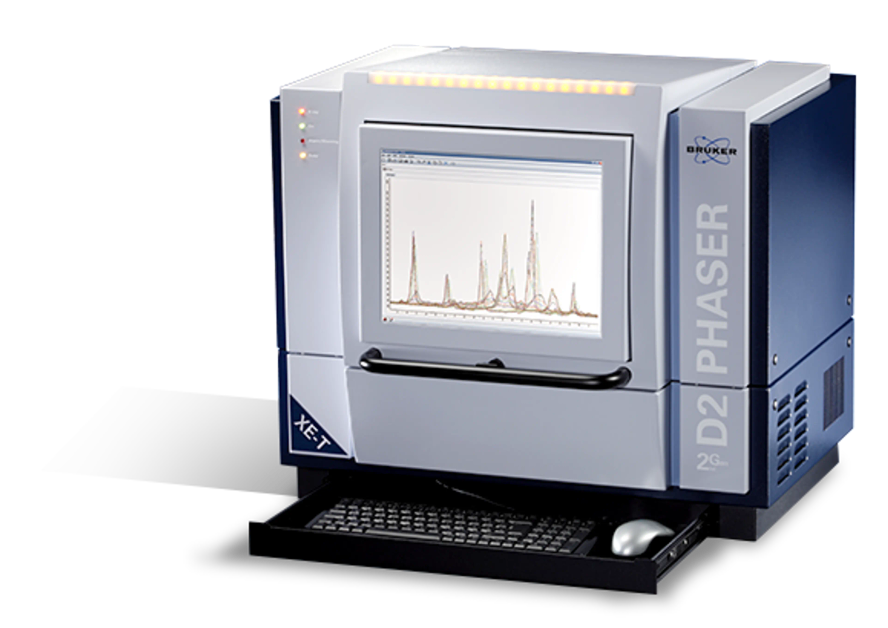
The D2 X-ray diffractometer (XRD) provides fast, reliable analysis of crystalline materials. It helps identify mineral phases and characterize crystal structures for research, material development, and quality control.
The Thermo Scientific Niton XL3t GOLDD is a handheld XRF analyzer for rapid, non-destructive elemental analysis of rocks, soils, and metals. Its advanced GOLDD detector improves sensitivity and enables light-element analysis, supporting on-site geochemical investigations and material characterization.
If you are already a user of the spectroscopy lab, you can book the instruments you were trained for, clicking on the following button "GSL booking system", for technical issues email gsl-itc@utwente.nl.
%20022b.avif)