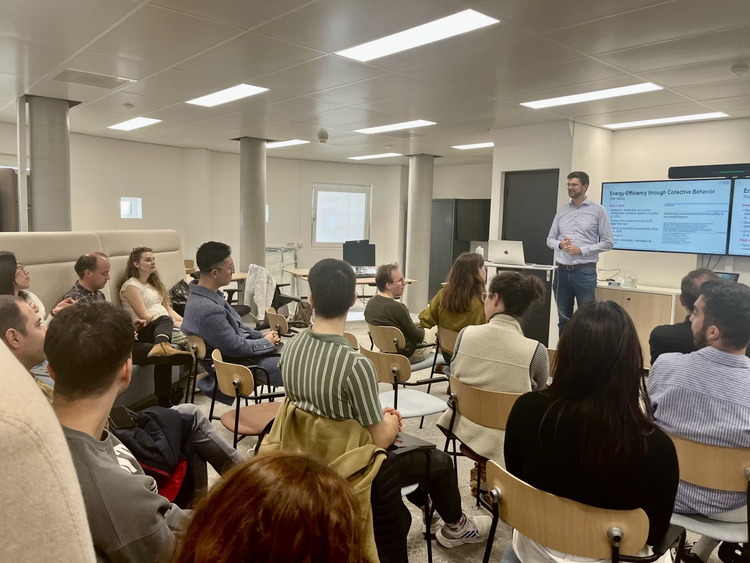
On 24 September, the University of Twente’s Energy-Efficient Computing community explored how data practices, organisational decisions and behaviour shape the energy impact of digital technology.
Making computing more efficient involves more than improving hardware and software. What data are collected, how analyses are organised and how much people use digital services also affect energy demand. These questions were the focus of Behavioural and Organisational Perspectives on Energy-Efficient Computing, held at Citadel.
Funda Yildirim, Assistant Professor in UT’s Cognition, Data and Education (CoDE) group, led the session. It followed the community’s August kick-off, which brought together expertise from across the computing chain, from chips to cloud. The follow-up examined the human and organisational choices within that chain.
Vincent van Hees, Lead Biotech Software Engineer at SE4BIO, drew on large-scale wearable research to connect data collection with efficient analysis. Keeping the original sensor readings allows them to be analysed again later, while consistent sampling makes it easier to repeat work across devices and over time. Using the GGIR pipeline for processing wearable data as an example, he described ways to limit unnecessary computation: rerunning only the steps needed, favouring simpler algorithms and avoiding duplicate processing.
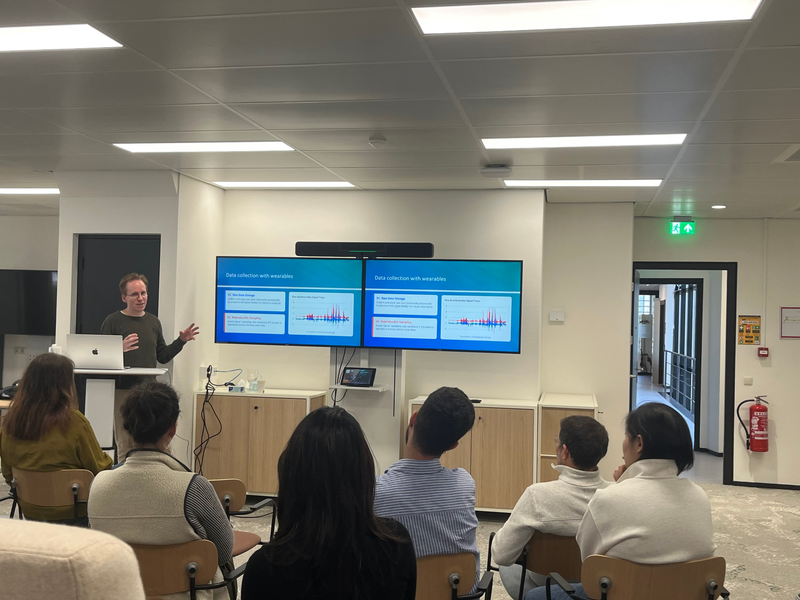
Joschka Hüllmann, Assistant Professor at UT’s Faculty of Behavioural, Management and Social Sciences, examined the energy demands of digital trace research. Digital traces are records generated as people use digital systems. Operating those systems, collecting and storing the data, preparing them for research and running analyses all require energy. Reusing data or earlier results can be difficult across different systems and research methods. He suggested exploring shared standards, more modular research tools and reproducible research methods.
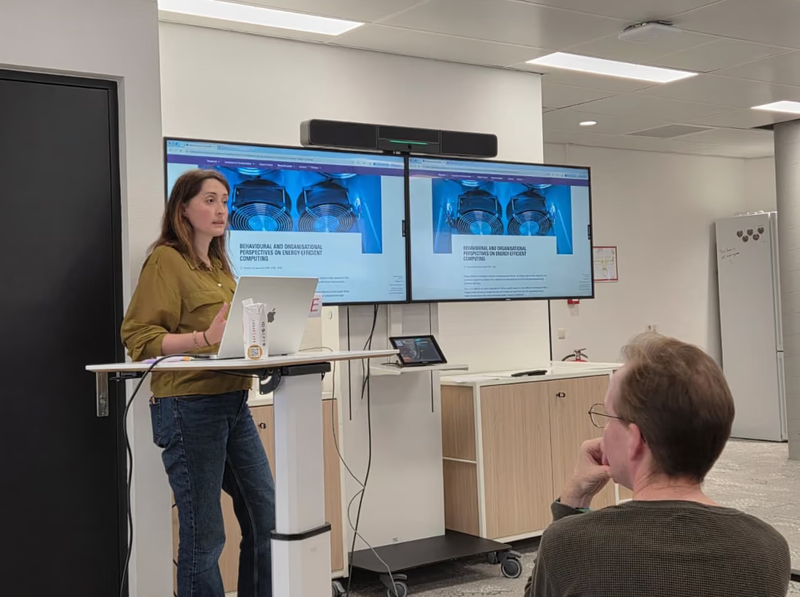
Funda Yildirim explained the rebound effect: a digital service may use less energy for each task, but the expected savings can shrink if people start using it more. An AI service, for example, could use less energy per request yet receive many more requests as it becomes cheaper or faster. She explored how perceptions of cost and environmental impact, as well as habits, can shape this response. She also pointed to a visibility gap: users and developers can see speed, quality and price, while energy use is less visible. Her presentation considered showing energy information when decisions are made, choosing lower-energy default settings and pairing feedback with incentives to help anticipate rebound.
The presentations linked choices made while collecting and analysing data with those made when digital services are used. They brought these behavioural and organisational questions into the wider Energy-Efficient Computing Community of Practice.
The second domain-specific EEC meeting will take place during the afternoon programme of the UT Climate Event on 3 November, from 14:30 to 16:00. The session will focus on sustainable data centres and the energy needed to run digital infrastructure and will be led by Syllas Rangel Carneiro Magalhaes, a researcher in UT’s Design and Analysis of Communication Systems (DACS) group.


