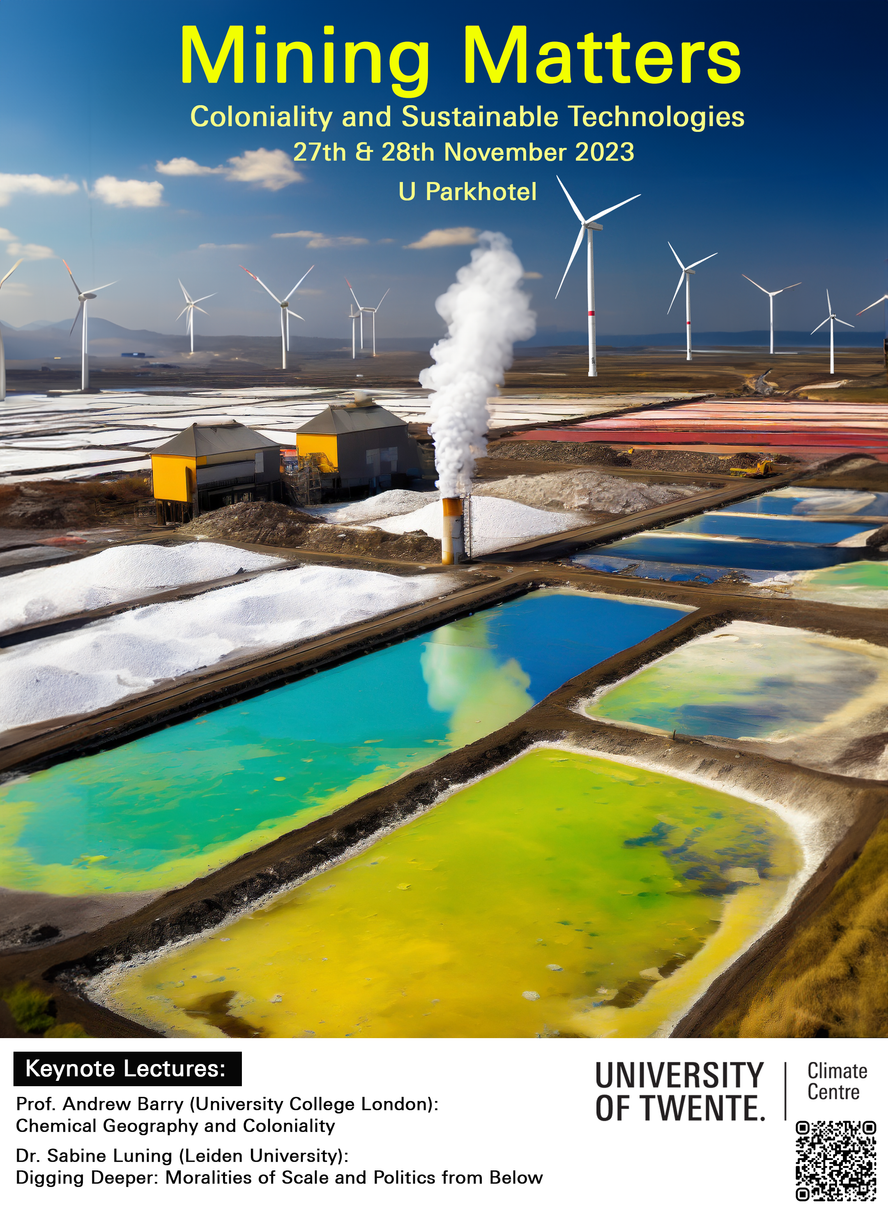
The current push to move away from fossil fuel reliance and invest in sustainable energy technologies like wind turbines or electric automobility is key to reach climate goals. While cutting emissions by phasing out fossil fuels is crucial, the transition to sustainables has stoked global competition for the required raw materials, such as nickel, cobalt, rare earth elements. If continued unchecked, this risks reproducing historically unequal colonial core-periphery relations, with rather powerful nations and companies extracting resources in formerly colonized areas in Africa, South America and Asia.
This workshop examines these relationships and their materializations through the lens of coloniality, interrogating how different actors and agencies, disciplinary histories, bodies of expertise and knowledge as well as resource materialities contribute to, contest and perpetuate extractive injustice. We bring together scholars from a variety of disciplinary locations, such as STS, history, anthropology, geography, chemistry and geology, and working in diverse regional contexts, i.e. EU, Africa, South America, and Asia, to debate issues connected to underground extraction. In view of our aspiration to critically interrogate (neo)colonial patterns, we ask in particular,
Keynote lectures:
We offer 25 seats for interested students and staff from University of Twente and other universities to join the full 2-day workshop programme with lectures and discussions (or to join 1 workshop day). Participation includes also the keynote lecture(s), vegetarian lunch(es) and coffee breaks, but does not include travel and accomodation.
You can find all information about this workshop, how to register and the full programme on the workshop's website.