Wind energy plays a crucial role in the transition towards renewable energy. We4Ce Engineering, 2-B Energy Holding, Suzlon and the University of Twente are going to develop and validate three complementary innovations for wind turbines that last longer and use less raw material. In the ECOWINd project, they are working on a rotor blade with a replaceable tip and a turbine that sees the wind coming.
As wind turbines become larger and more powerful, their production requires increasing amounts of raw materials. At the same time, rotor blades are difficult to recycle and vulnerable to erosion, lightning strikes and mechanical fatigue, which can lead to costly maintenance and premature replacement. The ECOWIND project addresses these challenges by developing innovative technologies that extend the lifespan of wind turbines, reduce material consumption and improve circularity.
The first is a modular rotor blade with a replaceable tip, preferably manufactured from recyclable thermoplastic materials. This would allow damaged or worn blade tips to be replaced without replacing the entire rotor blade.
The second innovation is an intelligent turbine control system that uses LiDAR measurements to predict approaching wind conditions, enabling the turbine to adjust its blades proactively and reduce mechanical loads. The third involves integrating these technologies into a lightweight design for the next generation of offshore wind turbines, with capacities of 15 MW or more.
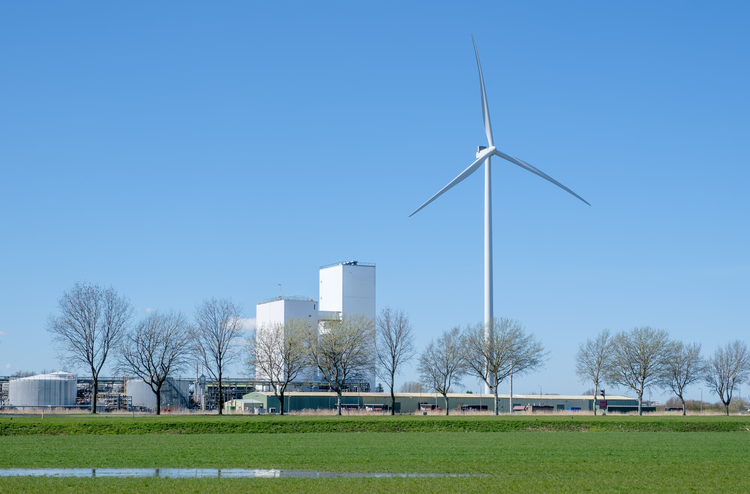
The innovations will be tested through prototypes, laboratory experiments and field measurements, including testing on an existing 6 MW wind turbine in Eemshaven. Based on earlier analyses, the project aims to achieve a 20% reduction in turbine material consumption and a 15% reduction in tower material consumption. By combining longer component lifespans, lower maintenance costs and more efficient material use, ECOWIND aims to make wind energy more sustainable and affordable.
At the University of Twente, Dr Huseyin Ozdemir works on ECOWIND. He is an assistant professor in the Engineering Fluid Dynamics group of the Faculty of Engineering Technology and studies the aerodynamics of wind turbine blades, including how erosion of the front edge of a blade affects its performance.
The project also strengthens the position of the East Netherlands region as a centre for innovative and circular wind energy technologies. ECOWIND is co-financed by the European Union through the European Regional Development Fund (ERDF) programme for East Netherlands.